
Thinking of redesigning your site? Likely a smart move.
Your website is your business’s front door, your digital storefront, office building, first impression, sales pitch, customer service desk, and strongest tool for brand association.
For most businesses today, a website is often one of the most valuable business assets—used to market and reach your customers, and basically stay alive.. (So no pressure, right?)
The times, they are a changin’
What was cutting-edge in 2006 isn’t quite cutting it now. And let’s be honest—even a site from 2018 is starting to feel geriatric by digital standards. Just like a physical space needs regular upkeep—new paint, updated signage, maybe some fresh landscaping—your digital presence needs maintenance, too.
Maybe your website was built fast to “just get something live,” or it no longer matches your brand, your audience, or your offer. Maybe it just feels… stale.
Whatever the reason, a website redesign is your chance to realign your digital presence so it tells a convincing story of who you are and where you’re going.
We’ve helped plenty of brands do exactly that—and it’s amazing what happens when your website finally reflects the level you’re playing at. Customers notice. And they take you seriously.
This guide walks you through the essentials of a successful website redesign—from strategy and UX planning to content and performance upgrades—so you can launch a site that works harder for your business.
Let’s dive in.
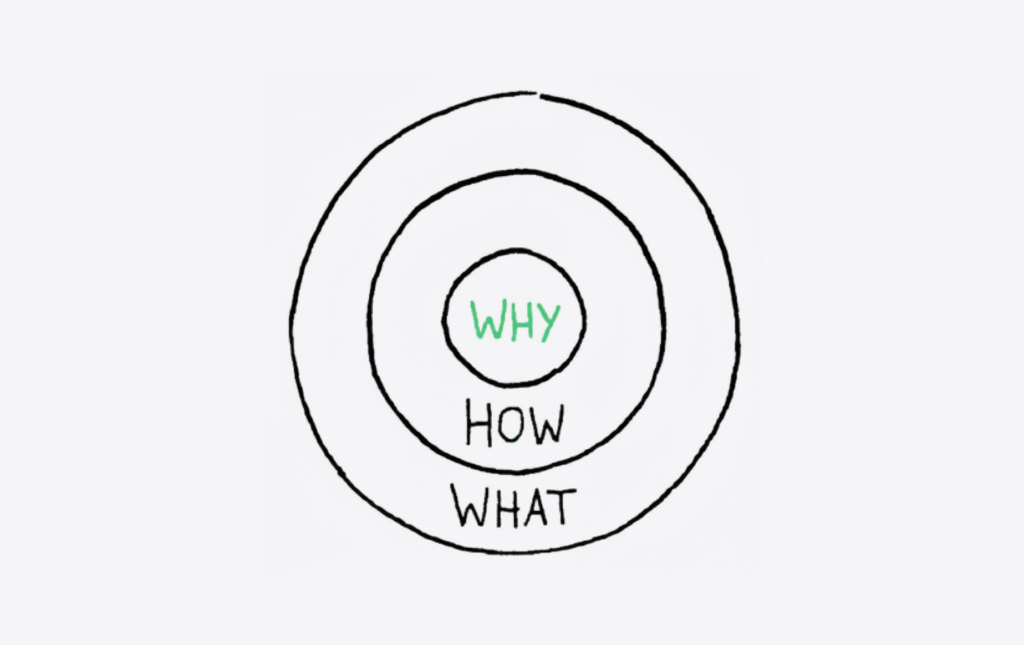
1. Start with why (thanks, Simon Sinek)
Before you dive into layouts, mood boards, or shiny new logos, stop and ask: Why now?
What’s changed in your business, audience, or goals that makes this the right moment?
Need help defining that? Check out our UX Strategy guide for a deeper dive.)
- Has your business grown or evolved?
- Are you gearing up for a wave of new attention—and want to make sure your site makes the right first impression?
- Does data or feedback show that your users are bouncing, confused, or frustrated with your current site?
- Has your brand or offerings evolved, but your website hasn’t kept up?
- Is your site just… kind of boring or misaligned?
A strong website redesign starts with strategy and clarity. Knowing why you’re redesigning—and what success looks like—keeps the process focused.
Think of it like checking the soil before planting: you want to know what you’re working with so you can grow something strong.
2. Audit your current site (and business)
This is where you look under the hood. No need to start from scratch—most website redesigns start by reviewing what’s already there.
Ask:
- What’s working? What’s not?
- What’s outdated?
- Where are users dropping off?
- Which pages are underperforming?
It’s also a good time to peek at competitors and benchmark against them. This step is all about pruning what’s not serving your users, customers, or business, and creating space and attention for the stuff that will move the needle.
We highly recommend a book called Essentialism, by Greg McKeown, for more on this. (Not an affiliate link, just something we believe every human with a dream should read.)
3. Know your audience (for real)
A website redesign isn’t about you—it’s about your audience. If your site doesn’t resonate with the people you’re trying to reach, it won’t convert, no matter how “pretty” it looks.
Ask:
- Who are our users?
- What are they trying to achieve?
- What confuses them or holds them back?
When your site addresses what your users need quickly and meaningfully, they stick around, engage, and convert. When it doesn’t, they don’t.
4. Refresh your content
A redesign without content updates is like putting a new roof on a crumbling house, or transferring a succulent to a stylish new planter but using the same soggy soil. No matter how good it looks, it’s going to rot unless you fix what’s underneath.
Review your:
- Headlines: Are they attention-grabbing, clear, and benefit-driven?
- CTAs: Are they actionable, focused, and compelling?
- Body copy: Is it useful, scannable, current, and jargon-free?
Make sure your content reflects who you are today—not who you were three years ago. Contrary to what a lot of people say, if your content is useful, concise, and interesting, people do read it. (And when people read it, search engines and AI models like Chat GPT deem you an expert and prioritize you in search results.)
5. Choose the right platform and tools
Your tools should support your goals—not get in the way. If your current CMS or hosting setup is frustrating, slow, or limiting, your website redesign is a perfect time to upgrade.
Consider tools like:
- Webflow or Framer for flexibility
- WordPress + Elementor for simplicity
- Shopify for e-commerce
- Wix Studio for an all-in-one, easy-to-use platform that suits most businesses
- Loveable for AI-powered sites (yep, that’s a thing now)
Need help choosing? That’s where we come in.
6. QA before you go live
This is your pre-launch safety net.
Click every link. Fill out every form. View it on mobile, desktop, and tablet. Check for typos, spacing issues, and weird bugs.
Better yet—test it on real users and customers. (See our article on usability testing) Can they tell what you do in 5 seconds? Can they navigate easily? Any usability testing is better than none at all and talking to customers and users is always a good idea.

7. Launch, learn, and evolve
Iterative design wins the game every time. We usually recommend planning an earlier launch and designing new features as we learn from usage and user feedback.
Some things we’d keep our eyes on post-launch:
- Are visitors sticking around longer?
- Are conversions improving?
- Are any unexpected issues popping up?
A website redesign isn’t a one-and-done project. Your site should continuously evolve with your business. But now you’ve got a solid foundation—and that’s half the battle.
Ready for a website redesign that actually works?
Whether you need a light refresh or a full overhaul, we at The Growth UX Studio love helping businesses redesign their websites with strategy, clarity, and performance in mind.
Reach out whenever you’d like to chat about building something that converts.
We’re here to help, and as always, we’ll be here all day.
Need a UX partner who understands business and designs for growth?
Let’s talk—Contact us today.