
Type “top ux agencies specializing in ai 2026” into Google right now and you will get back a dozen nearly identical lists, most of them written by the agencies ranking themselves number one. We know, because we read through them before writing this.
This article will explore a different angle for you. Instead of ranking agencies we have not worked with, we are going to tell you what “specializing in AI” should actually mean, because most agencies using that phrase mean something much smaller than they let on. Then we are going to show you our own AI work, not as a pitch, (OK, maybe a little bit as a pitch), but as the actual proof of what the distinction looks like in practice.
An “AI UX design agency” label doesn’t mean what you think
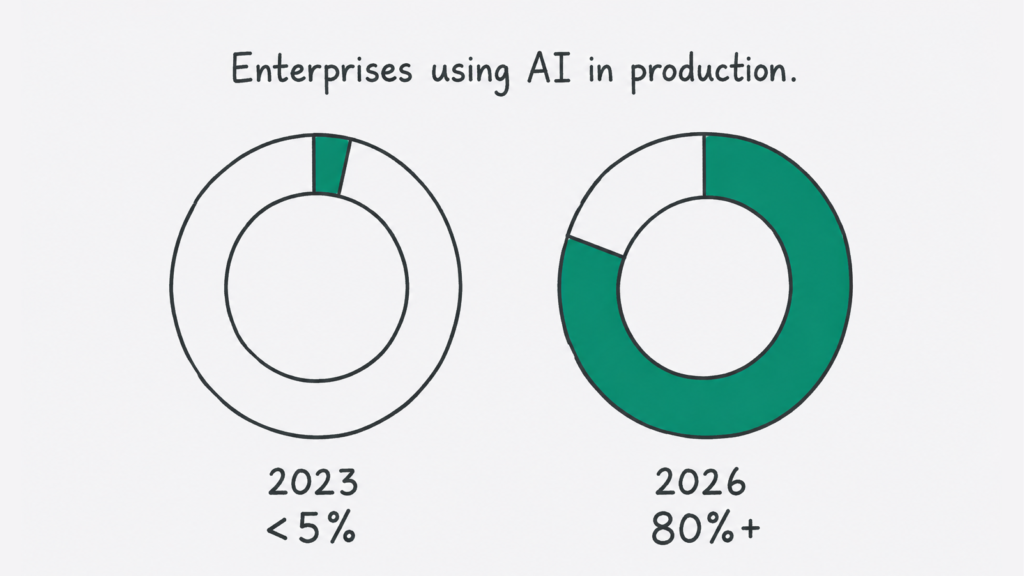
Gartner, the research firm that enterprises pay to forecast where technology is headed, estimates that more than 80% of enterprises will have used generative AI APIs or deployed AI-enabled applications in production by 2026, up from less than 5% in 2023. That is not a niche capability anymore. That is infrastructure.
Which means “we specialize in AI” as an agency pitch does not tell you very much on its own. Nearly every design and product team touches AI somewhere in 2026, the same way nearly every team touched mobile in 2012. The real question a founder needs answered is not whether an agency uses AI. It is whether the agency can design AI experiences that resonate with your customers and earn their trust..
That distinction matters more than it sounds. Figma’s most recent design industry data found that 40% of designers and developers still do not trust AI-generated outputs enough to rely on them fully, even though 78% report real efficiency gains from using AI in their process. If the people building with AI tools every day are not fully sure when to trust the output, your customers definitely are not going to trust an AI feature by default. Someone has to design that trust deliberately. That is the job, and it is a different job than knowing how to prompt well.
Using AI, designing AI, and understanding AI: three different pros
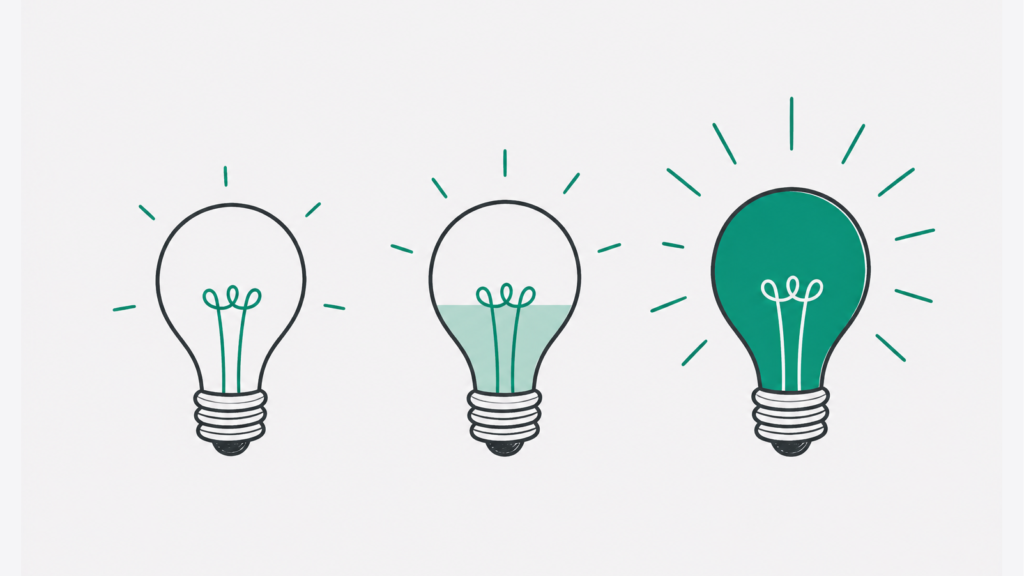
When an agency says “we specialize in AI,” they could mean one of three very different things.
Using AI. The agency uses AI tools like Claude, ChatGPT, or Figma’s AI features to move faster through their own process. This makes the agency more efficient. It does not make them qualified to design an AI-powered product for your customers.
Designing AI. The agency has actually shipped features and products where AI is the core experience, not just the agency’s internal shortcut. Visual search, recommendation engines, AI-powered visualizers, natural language product discovery. This is a real and specific skill that requires multi-level thinking and technical fluency.
Understanding AI. The agency knows why people trust or reject an AI feature, and designs for that specifically. What the AI explains about itself. What happens when something goes wrong. How much control the person keeps. This is the rarest of the three, and it is the one that actually protects your product.
Most agencies you will find ranking for this keyword are doing the first. A meaningful number are doing the second. Very few are doing all three at once. We design AI products, and we design for whether people trust them. That is a specialization, not the tool stack.
What UX for AI products looks like in our work
Lowe’s visual search, mobile and web
Copy is one of the most powerful UX tools for AI products. When we designed Visual Search for Lowe’s, letting customers scan a barcode or snap a photo to find a product, we were looking to solve a trust problem before we were solving a discovery problem. For example, Mobile web users have different security concerns than app users. Asking someone to grant camera access on a website hits differently than asking inside an app they already downloaded and trust.
UX writing did most of the actual work here, and it does double duty on any AI feature that needs a permissions like this. On one side, plain language microcopy tells someone exactly what is being accessed and why, instead of making them trust a generic system prompt. On the other side, and this is the part that gets overlooked, good permission writing is a usability problem first. It asks at the right moment, in the flow, right when someone taps to scan something, not at app launch before there is any context for why you’re asking. It asks for one thing at a time instead of stacking requests. And it gives people an easy way to change their mind later instead of burying the decision in a settings menu they will never find.
We wrote every piece of copy around Lowe’s camera permission with both jobs in mind, not just to reassure people it was safe, but so the flow itself made sense. That is the actual AI feature. The camera and the image recognition behind it do not matter much if the permission moment confuses the person you are asking.
That work paid off. The mobile web version of visual search ended up converting 2X higher than the existing app version. See the visual search case study The lesson mapped directly onto every AI feature we have designed since. People do not adopt an AI capability because it is smart. They adopt it because of the usability that is born from transparency.
Walmart Aspectiva, AI and NLP-powered product discovery
Our work with Walmart Aspectiva on AI and NLP-powered product discovery is under NDA, so we cannot share specific outcomes. What we can share is the principle that came out of it, because it shows up in every AI product we touch since. Read more about our approach to AI product discovery NLP and AI-powered discovery only works if people understand and trust what it is doing. The UX layer, how the AI surfaces a recommendation, how it explains its own logic, how it handles the moment it gets something wrong, decides whether people actually engage with an AI feature or quietly ignore it.
We have said this before and we will keep saying it. UX is the moat for AI products.
What we’re building right now
We are currently doing AI-heavy product design work with early-stage startups, and user behaviors and expectations aren’t much different around AI. But when designing tools, making real users comfortable enough to use the tools without having them worry the product, now so efficient, is out to take their jobs, is crucial. (We’ll update this post with the details once that work is ready to share publicly.)
How to choose a UX agency for AI products
Before hiring a UX agency, look at the AI features they have shipped. We’re all using AI in some way or another, the tools are standard. It’s become almost like asking if we use the internet.
Ask how they design for failure, not just for success. Nielsen Norman Group’s 2026 research on the state of UX names trust as the defining AI design challenge of the year, and their own framing is direct: “Building that confidence requires fundamentals: transparency, control, consistency, and support when the system fails.” An agency that cannot describe how they design for the system failing has not actually designed a real AI product yet.
Ask who owns the research. AI can summarize behavior. It cannot tell you whether your specific customers will trust a specific feature in your specific product. If an agency’s answer to “how do you validate this” is “we test it with AI,” that is a red flag, not a specialization.
Ask what happens to the interface when the AI is uncertain. A confident wrong answer erodes trust faster than a system that says “I’m not sure, here’s what I do know.” If an agency has never had to design that state, they have not shipped enough real AI products to specialize in it yet.
Invest in strategy so you don’t make this expensive mistake
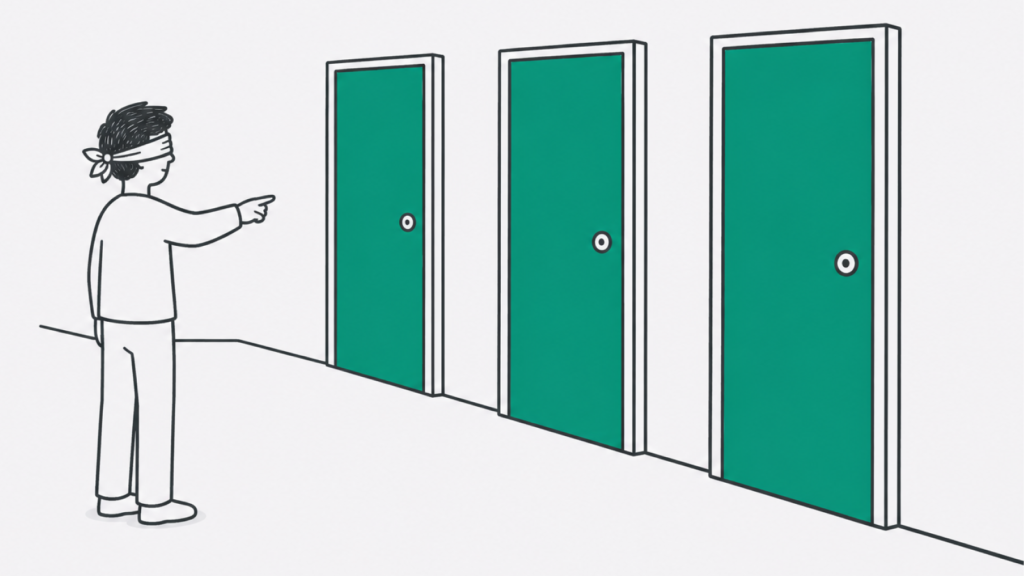
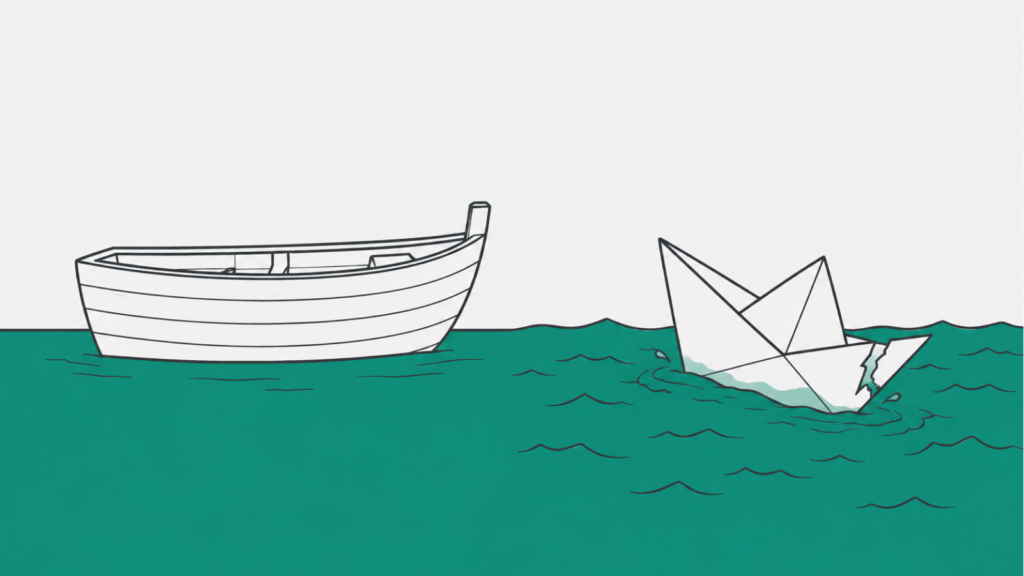
Now that you can generate a “beautiful” design with a couple of prompts, a common mistake we see founders make is shipping these AI-generated interfaces. A flashy AI demo is easy. An AI product with a foundation in UX strategy that solves a meaningful problem is the only way you can really stand out. It’s harder thing to build, but it is the thing that protects your business.
The second mistake is assuming AI specialization is about speed. Founders often ask how fast an agency can ship an AI feature, when the better question is how the agency plans to earn trust for it. Fast and untrusted is worse than slower and adopted. A feature nobody uses did not save you any time at all.
Remember, your customers are not evaluating your AI feature on how advanced it is. They are evaluating how they feel after they use it.
Key takeaways
- “Specializing in AI” should mean designing AI products and understanding why people trust them, not just using AI tools internally.
- By 2026, AI tooling is standard infrastructure, not a differentiator on its own (Gartner, 2023).
- Even design teams do not fully trust AI output yet (40%, Figma, 2025), so assume your customers will not either until you design for it.
- The best proof of a top UX agency specializing in AI is shipped work, not a portfolio of AI logos. Our Lowe’s visual search, flooring and paint visualizers, and Walmart Aspectiva work all show the same pattern.
- Vet any agency by asking how they design for AI failure states, not just AI success states.
Frequently asked questions
What does it mean for a UX agency to specialize in AI? It means the agency has actually designed and shipped AI-powered product experiences, not just used AI tools to speed up their own process. Real AI specialization shows up in how an agency handles trust, explainability, and failure states inside the product itself, not in how many AI tools sit in their tech stack.
What’s the difference between an AI design agency and a regular UX agency? A regular UX agency may use AI to move faster internally. An agency that genuinely specializes in AI has designed features where AI is the core experience, like recommendation engines, visual search, or AI-powered visualization tools, and has had to solve the trust and adoption problems that come with putting AI directly in front of customers.
How do I know if an agency actually has AI UX experience? Ask for a specific example of an AI feature they shipped, what happened when it failed or got something wrong, and how they redesigned around that. Vague answers about “AI-powered workflows” without a real product example are a sign the experience is thinner than the pitch.
Do agencies that specialize in AI cost more? Not necessarily more than any senior UX partner, but the investment reflects the complexity. Designing for trust, explainability, and failure states takes more research and iteration than a standard interface, because you are also designing how a person decides whether to believe the system.
What should I ask before hiring a UX agency for an AI product? Ask to see a shipped AI feature and what happened when it broke or misfired. Ask how they design for uncertainty, not just the ideal case. If you want a partner who has actually done this work, from AI-powered visual search to natural language product discovery, get in touch and we can walk you through it.