
If you haven’t worked with an integrated design and development team, you don’t know what you’re missing. Hiring a freelance designer, or a design team that hands you a stack of Figma files and disappears, is what most founders think this has to look like. Now imagine what it would be like if one person owned the whole thing instead, accountable for the work and the communication, so you’re not the one managing it.
We built The Growth UX Studio to not do that. We’re not a development studio, but we have a close network of and working relationships with a plethora of development studios, each with their own particular strengths. We love bringing in the right one for the right project. We own project management across the whole thing, from strategy and creative through design and development, so you’re not the one translating between a designer and a developer who’ve never spoken to each other. That’s what we mean by integrated: separate studios, each with real expertise, working as one team on your project instead of leaving you to stitch it together yourself.
Here’s what that actually requires, and what to watch for if you’re evaluating who gets to build your product.
What outsourced UX design usually misses
When founders come to us, it’s rarely because the design was bad. It’s because the design and the build never talked to each other.
Take Friends Cove Mutual, a regional insurance company that was running underwriting, inspections, and admin work through a patchwork of spreadsheets, email rules, and personal checklists. Everyone had built their own workaround, and none of them talked to each other. A typical outsourced UX design engagement would have delivered wireframes for a "better dashboard" and called it done. We mapped the actual workflow across all three roles, built the information architecture around how the work really moved, and worked hand in hand with a development partner to build the tool itself in Retool. See the full case study. The output wasn’t a deliverable. It was a working system their team uses every day.
That’s the piece most outsourced UX design engagements skip. Research and wireframes are useful. They’re also not the thing your team can actually use on Monday.
Why the design-to-development handoff is where projects break
Here’s the uncomfortable data point: in surveys on design-to-development handoff, 65.9% of professionals report wasting 25 to 50% of their time, 10 to 20 hours a week, on inefficiencies in that handoff, and only 26% report genuine satisfaction with how the design actually gets executed in the final product, according to Nascenia’s research on design-development misalignment.
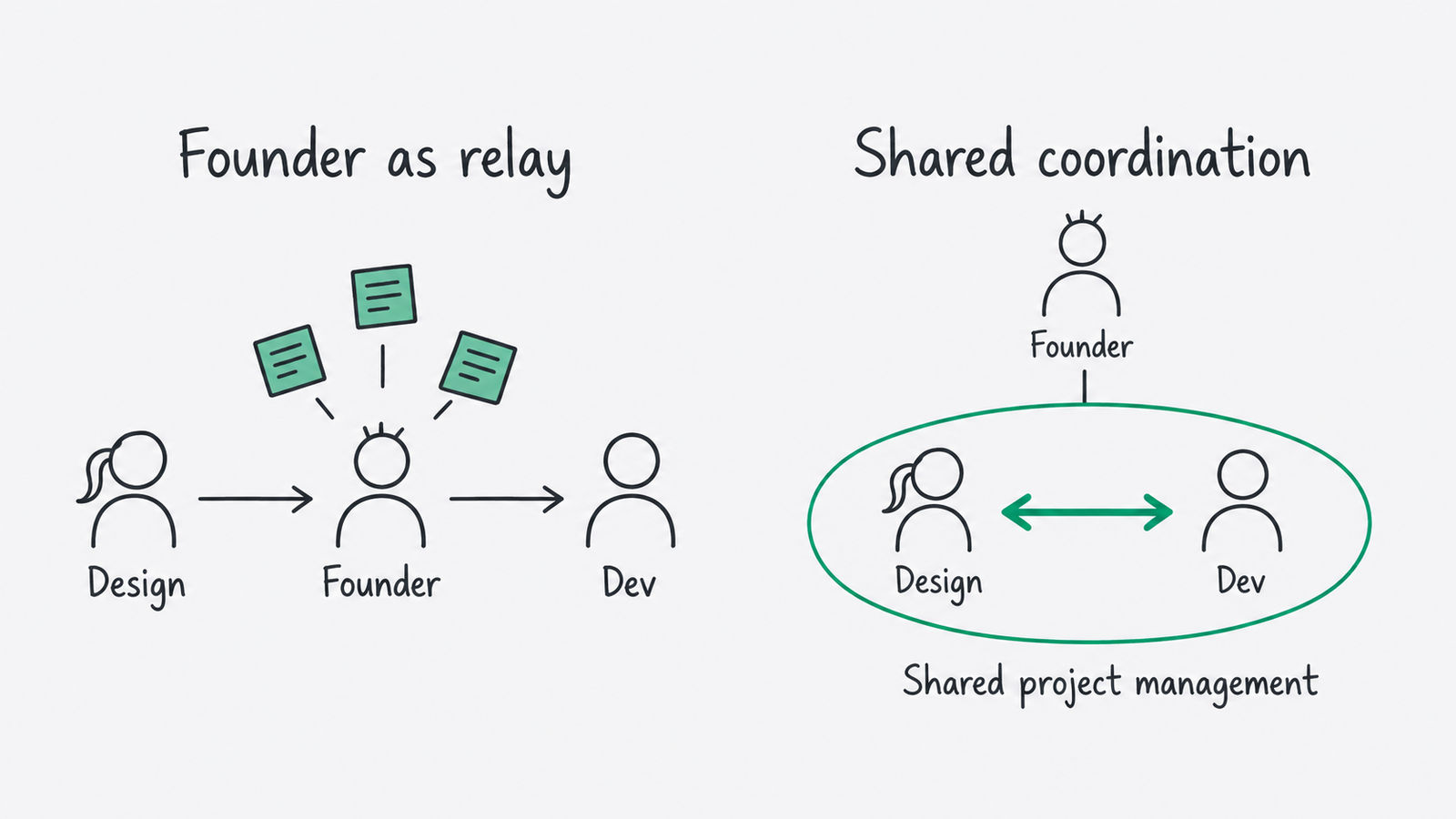
Read that again. Three out of four teams are unhappy with how their own design gets built. That’s a structure problem more than it is a talent problem. When the designer and the developer report to different companies, with different incentives and no shared accountability for the outcome, someone has to sit in the middle catching what falls through. Usually, that someone is you.
There’s a real business cost to getting this right, too. McKinsey’s Business Value of Design research tracked 300 public companies over five years and found that top-quartile design performers saw 32 percentage points higher revenue growth and 56 percentage points higher total shareholder returns than their industry peers, according to McKinsey’s "The Business Value of Design". That gap doesn’t come from a prettier interface. It comes from design decisions that actually made it into the shipped product, because someone was accountable for that happening.
What a real UI/UX design and development services partner actually does
A partner, not a vendor, does three things a freelancer or a single-discipline agency usually can’t.
They own the strategy, not just the screens. Our UX design work always starts with understanding your business goals and your users’ real behavior, not just what a stakeholder asked for. We covered this in more depth in our post on outsourcing UX design, but the short version is this: strategic ownership means the partner is accountable for the clarity of the whole experience, not just the pixels they were asked to produce.
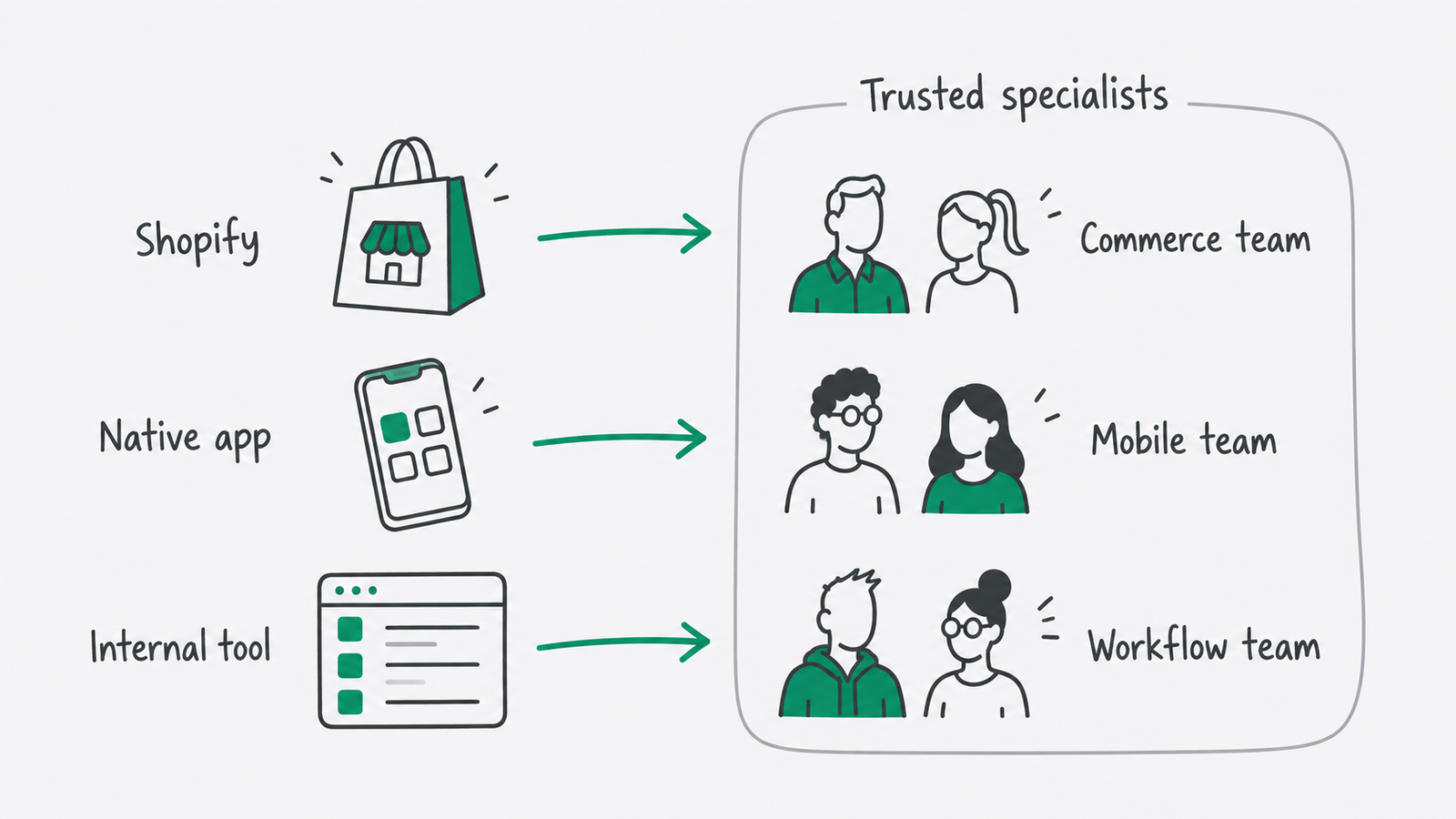
They have a development bench, not a single vendor lock-in. This is where we’re honest about how we actually work. We don’t have one in-house dev team we force every project through. We keep a trusted bench of development partners, both US-based and offshore, and we match the right team to your product based on what you’re actually building. A Shopify storefront rebuild needs a different skill set than a custom internal tool. A native mobile app needs different expertise than a Retool workflow platform. Matching the right builder to the right job, instead of forcing every client through the same team regardless of fit, is how you get a build that’s actually right for your product instead of just familiar to your vendor.
They co-own project management with development, instead of leaving it to you. This is the part founders underestimate until they’ve lived without it. When you hire a designer and a developer separately, you become the project manager by default. You’re the one relaying feedback, chasing timelines, and figuring out why the build doesn’t match the file. We manage that process together with whichever development partner is on your project, so design and development are talking to each other the whole way through, not just at the handoff.
UX design agency for SaaS: what changes when the product isn’t a website
If you’re a SaaS founder evaluating a UX design agency for SaaS specifically, the calculus is a little different than it is for ecommerce. SaaS products live and die by onboarding, activation, and the thousandth time a user opens the app, not just the first impression. A UI/UX design and development services partner for SaaS needs to understand retention mechanics, permission structures, and edge cases at scale, not just how the landing page converts.
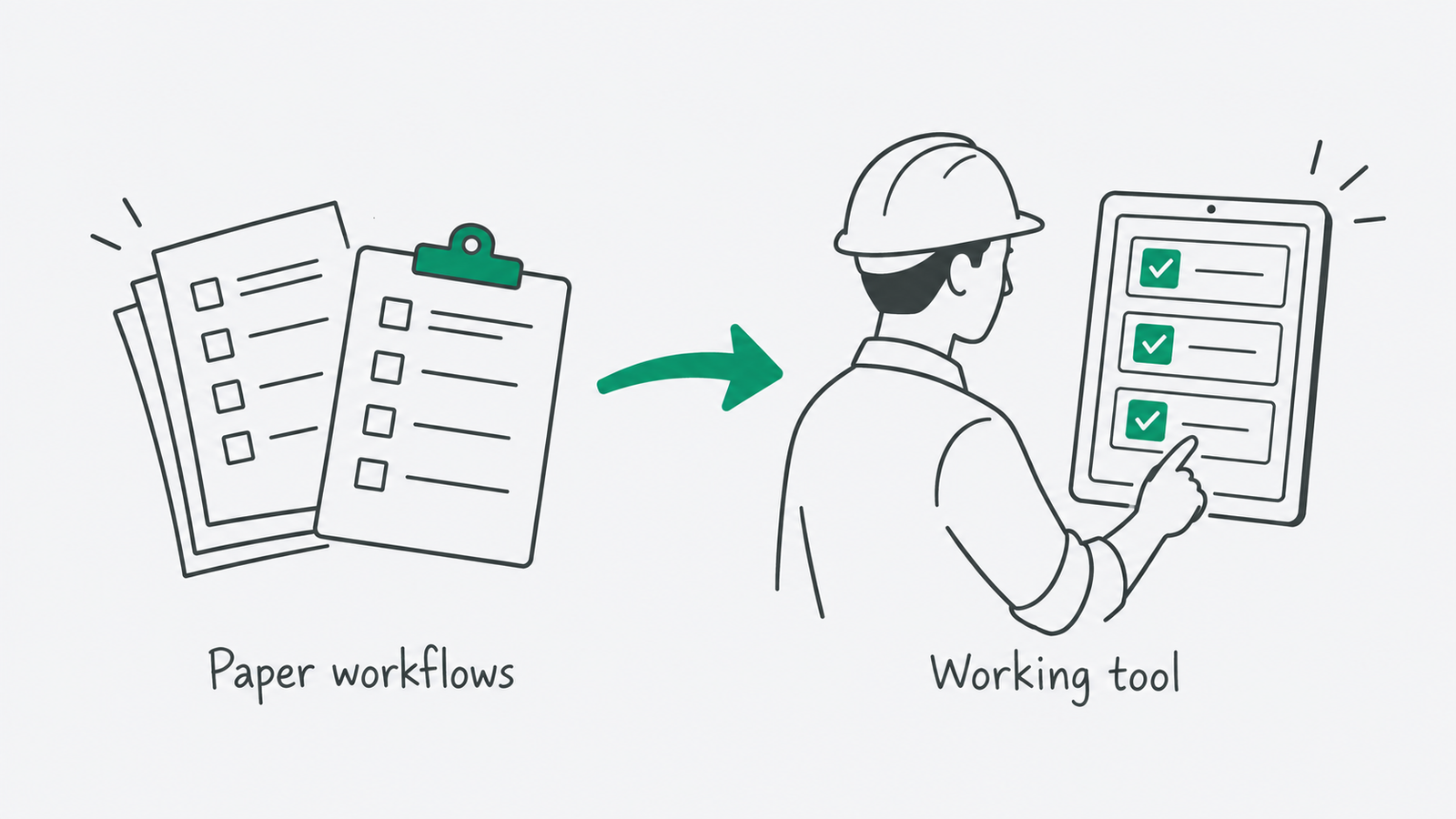
Turn Time Pro is a good example of what that looks like when it’s done right. TurnTech Solutions needed a 0-1 build of a cloud-first quality control and project management platform for the refinery turnaround industry, a $3.74 billion market where every day beyond schedule costs $1.2 to $3 million in lost margin. We led the discovery and designed the platform, then worked closely with a development partner through the build, replacing paper-based workflows that were quietly costing the client real money every single day. See the full case study. Nobody in that industry was asking for a beautiful interface. They needed something usable enough that people with no software background could run a multi-million-dollar operation through it without breaking anything.
Product design agency or full build partner: know which one you’re hiring
A lot of companies call themselves a product design agency and mean "we’ll wireframe it and wish you luck." Here’s a simple way to tell the difference before you sign anything.
| What to ask | Design-only agency | Design and development partner |
|---|---|---|
| Who builds the final product | You find and manage a separate developer | The partner’s dev bench builds it |
| Who runs project management | You do, by default | Design and development manage it together, end to end |
| What you receive | Figma files and a prototype | A working, shipped product |
| Who’s accountable if the build doesn’t match the design | Nobody, technically | Both, together |
| How they choose developers | Not applicable | Matched by specialty to your specific product |
If you can’t get a straight answer to the second and fourth rows, you’re looking at a design-only engagement, whatever the pitch deck calls itself.
Common mistakes founders make when hiring for this
The biggest mistake is hiring for the deliverable instead of the outcome. A beautiful prototype that never gets built correctly is worth exactly nothing to your business. Ask any partner you’re evaluating what happens after the design is "done." If the answer is a handoff document, keep looking.
The second mistake is assuming cheaper offshore development means lower quality, or that US-only development means higher quality. Neither is automatically true. What matters is whether the specific team has built the specific type of product you need before, and whether someone senior is matching that team to your project intentionally instead of defaulting to whoever’s available.
The third mistake, and we see this constantly, is skipping project management to save money. It never actually saves money. It just moves the cost from a line item to your own time, and founder time is the most expensive resource in the building.
Key takeaways
- UI/UX design and development services should be one accountable relationship, not two separate vendors you’re stitching together yourself
- 65.9% of professionals waste 10 to 20 hours a week on design-to-development handoff friction, and only 26% are satisfied with how their design actually gets built
- Top-quartile design performers see 32 percentage points higher revenue growth than industry peers over five years, but only when the design actually ships as intended
- A real partner matches development talent (US and offshore) to your specific product instead of forcing every client through the same team
- Project management shared between design and development, instead of left to you, is what turns "we designed something nice" into "we shipped something that works"
FAQ
What’s the difference between UI/UX design and development services and just hiring a UX design agency?
A UX design agency typically stops at wireframes, prototypes, or a design system. UI/UX design and development services carry the work through to a built, working product, with the same team accountable for both the design and the build matching each other.
How do you choose which developers to use for a project?
We keep a bench of trusted development partners, both US-based and offshore, and match the team to the project based on what’s actually being built. A native app, a Shopify build, and a custom internal tool each need different expertise, so we don’t force every client through the same developer by default.
Do you handle project management, or do we need our own PM?
We manage the project alongside your development partner on every engagement. You get design and development staying in sync with each other, instead of relaying feedback between two vendors yourself.
Is this a good fit for an early-stage startup, or only bigger companies?
It’s built for founders from seed through Series B who have some design or development in place but no one senior tying the strategy, the design, and the build together. If you’re past the "just ship something" phase and need it to actually work, this is exactly the gap we fill. Take a look at our case studies or get in touch to talk through your specific product.
Sources and further reading
McKinsey & Company. "The Business Value of Design." 2018. mckinsey.com
Nascenia. "Dev vs Design Misalignment: The Single Problem Killing Your Product Success." nascenia.com
Ready for a partner who designs and ships?
We work with ecommerce brands and startups from seed to scale who need UI/UX design and development services that don’t stop at the handoff. We design it, partner with a development studio matched to your product to build it, and manage the project together with them from strategy through launch. Let’s talk about what you’re building.