
How do you know what to look for and find the right user interface design services? If you’re focused on growth and outcomes, good UI has a job to do. It needs to scale as your product grows. It needs to meet the intent someone showed up with, and meet their expectations once they’re there. And it needs to stay accessible, readable, and easy on the eyes, so people can actually find what they came for.
We’ll walk through each of those below, how they shift depending on what you’re actually building, and how to choose a partner who can deliver on all of it, not just Figma files.
What good UI needs to do
Good user interface design is not decoration. UI has a very important job to do, the same way the people using it have a job to do when they open it. It’s a means to an end, not the end itself. Here are the qualities to look for to make sure your UI actually delivers on that job.
Built to scale
Your product is going to grow, add features, and serve more people than it does today. A UI that only works for what you have right now is something you’ll be redesigning again in a year. Good UI design is always built as a system, with room to grow, not a one-off set of screens.
Designed around user intent
People don’t land on your product to admire it. They showed up to do something: buy a product, complete a signup, find an answer. Every screen should be designed around what that specific person is trying to accomplish in that moment, not around what looks impressive in a portfolio.
Recognizably yours
In a crowded market, a generic interface makes you forgettable. Good UI design gives your product a visual identity that’s recognizably yours, not a template that looks like everyone else’s.
Confidence and connection
People remember how a product made them feel, not just whether it worked. Good UI design makes someone feel confident, capable, and taken care of. That feeling is what turns a one-time visitor into a repeat customer.
Respect for time and attention
People already spend more time on screens than they’d like to. Good UI design does not exploit that. It is not built around infinite scroll, manipulative notifications, or dark patterns designed to keep someone open longer than they came for. The goal is not to make someone unable to stop. It’s to make them feel good after they leave, because the product did what they needed, clearly and quickly. That is a business decision as much as an ethical one. Respecting someone’s time and attention is what brings them back on their own terms, not because the interface tricked them into staying.
Accessible from the start
Good UI design works for people with different abilities, devices, and contexts, not just the person who tested it in a conference room. Accessibility is not an add-on at the end. It’s part of what “good” means.
Readable and easy to use
Contrast, spacing, type size, and visual hierarchy determine whether someone can actually use your product without straining. This sounds basic. It is one of the most commonly skipped steps.
Different products need different priorities
Not every interface is solving the same problem, and good user interface design services should treat them differently.
An ecommerce product page needs to reduce hesitation and move someone toward a purchase decision. A SaaS onboarding flow needs to get someone to their first real value as fast as possible, before they lose patience. An internal, B2B tool needs to reduce cognitive load for someone using it eight hours a day, not impress them in the first five seconds. A marketing site needs to build trust and credibility before someone even becomes a user.
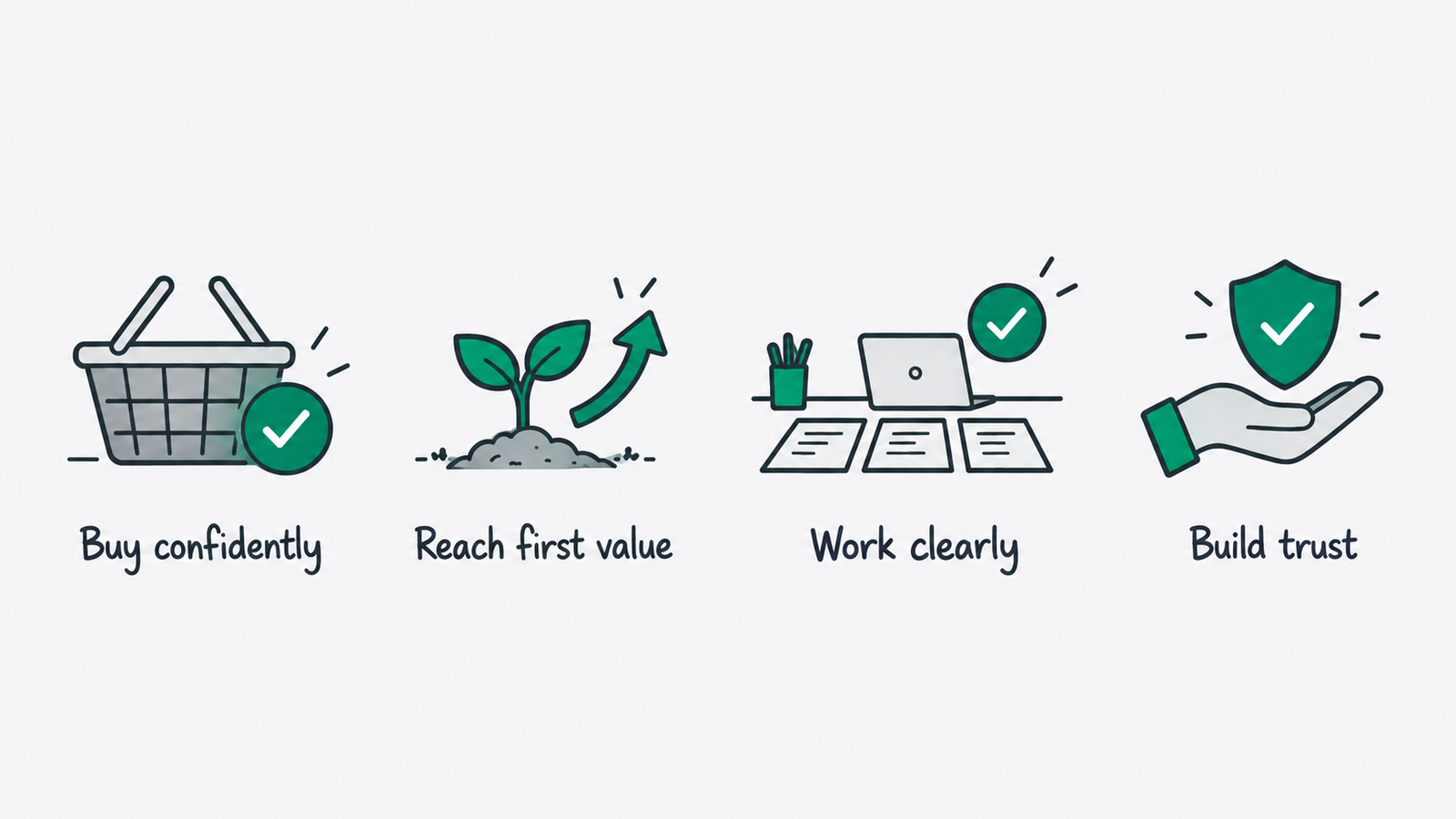
The qualities above (scalable, intent-driven, differentiated, resonant, accessible, readable) hold across all of these. What changes is which one matters most, and how it actually shows up on the screen.
UI and UX: what your partner should cover
This is where a lot of confusion starts. Many teams say “UI design” when they mean the whole experience: how a product looks, how it behaves, and whether it actually solves the customer’s problem. Those are two different disciplines that happen to live in the same sentence.
User interface design is the surface. It’s the layout, the typography, the color system, the buttons, the way a screen visually communicates what to do next. User experience design is the strategy underneath it: the research, the information architecture, the flows, the decisions about what the interface should even be trying to accomplish.
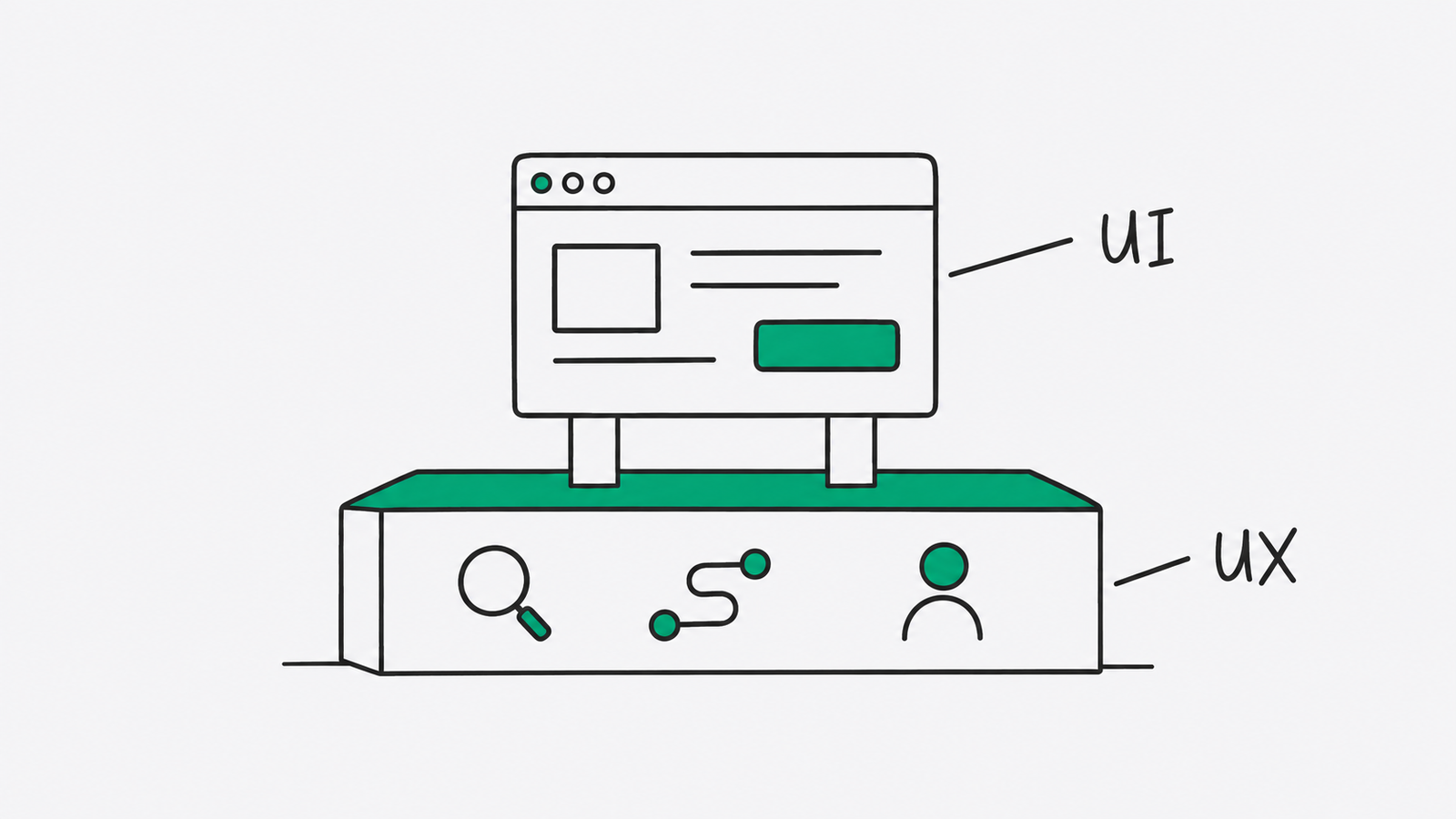
Good user interface design services should include UX thinking by default, because an interface designed without understanding the user’s actual workflow is just decoration. If a vendor’s proposal only mentions screens and never mentions your customers, that’s worth noticing.
Why interface quality matters to the business
Most founders come to us after they’ve already tried the checkbox approach. They hired a template, a junior designer, or a freelancer off a marketplace, got something that technically shipped, and watched their metrics stay exactly where they were.
That’s not surprising once you look at the research. Stanford’s Web Credibility research found that people judge a company’s trustworthiness largely based on how the site looks and feels, and they form that impression almost instantly. A well-designed interface isn’t decoration. It’s the first thing your customer uses to decide whether to trust you at all.
And the upside of getting it right is not small. Forrester’s research on ease of use found that every dollar invested in interface and experience design can return $10 to $100 back to the business. McKinsey’s Design Index study, published in 2018, tracked 300 public companies over five years and found that top-quartile design performers saw 32 percentage points higher revenue growth and 56 percentage points higher shareholder returns than their industry peers.
In audits we’ve run across ecommerce and SaaS clients, we see the same pattern at every size of business. The interface is never just decoration. It’s the thing standing between your customer and the decision to trust you.
What a UI design engagement should include
A real UI design engagement, done well, moves through several stages. Skipping any of them is usually where things go wrong later, and cost more to fix than it would have to do right the first time.
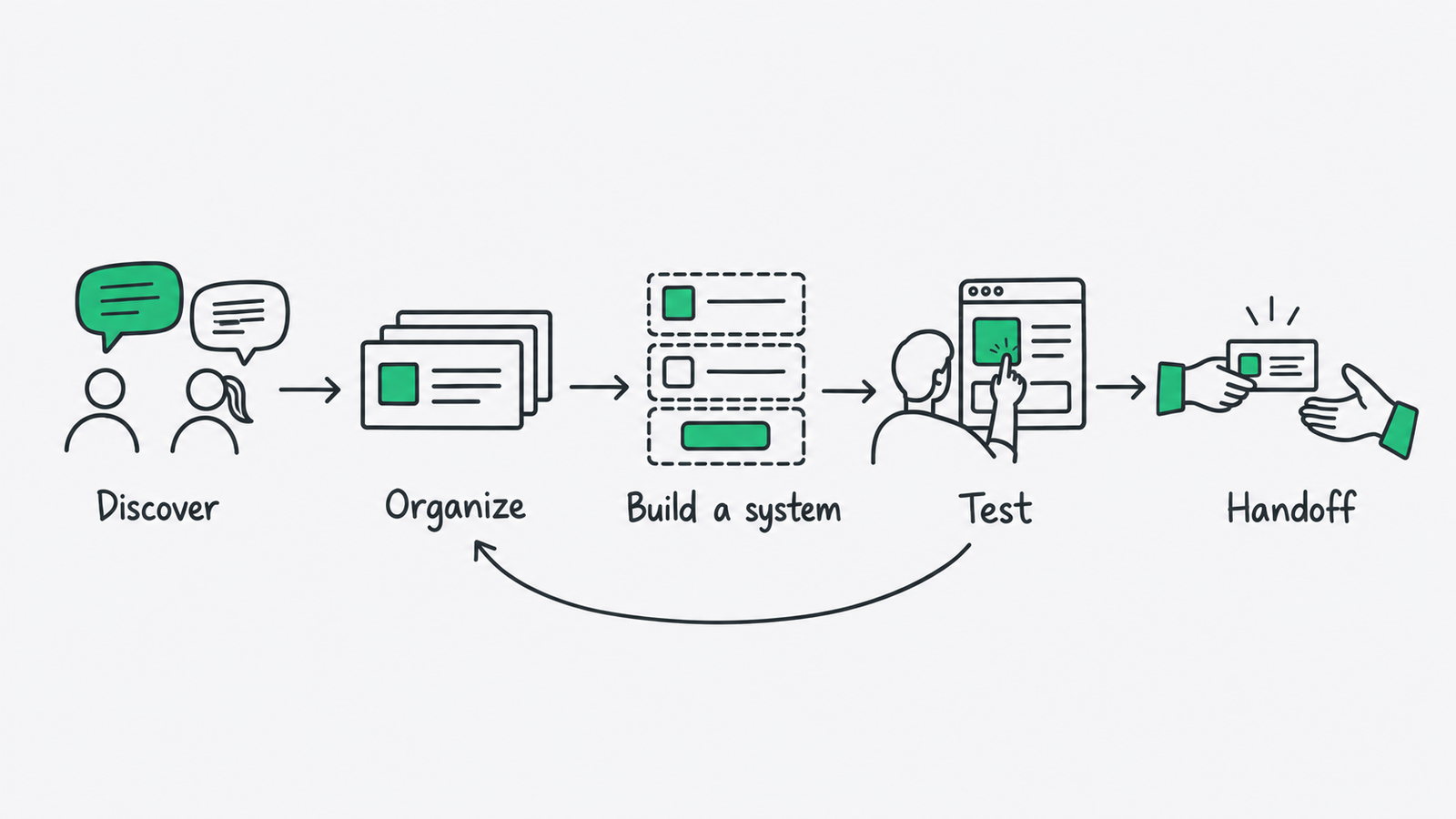
Discovery and research
Before anyone opens Figma, a good partner should be asking about your customers, your funnel, and what’s actually broken. Not just what you want it to look like.
Information architecture
This is the unglamorous part that actually drives revenue. In audits we’ve run, restructuring what content gets priority on a page (what shows up first, what competes for attention, what gets out of the way) is consistently one of the highest-leverage changes we make. Often worth more to conversion than a full visual redesign.
A visual design system
Typography, color, spacing, and component patterns that stay consistent as your product grows. Without this, every new feature adds visual debt that a future team has to untangle.
Prototyping and usability testing
How things move, respond, and behave, tested with real people before a single line of production code gets written. This is where a lot of cheaper providers cut corners, because prototyping and testing take time they’d rather bill as “extra.”
Developer handoff
Specs, redlines, and a design system your engineering team can actually build without guessing. An interface that looks perfect in a mockup and falls apart in production wasn’t really finished.
How to choose the right design partner
Once you understand what the work should include, the harder question is who should do it.
Freelancers are often the cheapest option and can be a smart choice for a narrowly scoped project: a landing page, a single flow. What they usually can’t offer is strategic judgment about your broader product or business.
Agencies bring more structure and more hands, but the quality gap between agencies is enormous. Ask who will actually be doing the work. A senior team on the pitch call and a junior team doing the actual design is one of the oldest bait and switches in this industry.
Fractional design leadership sits in between: senior strategic thinking without the cost of a full-time hire. For founders who need someone who can translate customer behavior into a product roadmap, not just fill in screens, this is often the better fit.
Whichever direction you choose, ask these questions before signing anything:
- Who exactly will be doing the work, and what’s their experience level?
- What does your discovery process look like before design starts?
- How do you test whether a design decision actually worked?
- Can I see examples of interfaces you’ve designed for businesses like mine?
- What happens after handoff? Do you support implementation?
Common hiring mistakes
A few mistakes we see over and over.
Hiring for portfolio polish instead of business fit. A stunning portfolio doesn’t tell you whether that designer understands ecommerce checkout psychology or B2B onboarding. Ask what problem each piece in the portfolio actually solved.
Skipping discovery to save time. It never saves time. It just moves the cost to later, when you’re redesigning the same screens six months from now because nobody understood the actual workflow first.
Treating UI as a one-time project instead of an ongoing practice. Your product keeps evolving. An interface that isn’t revisited becomes the same kind of technical debt as unmaintained code, except most teams don’t notice until conversion quietly drops.
Remember, you are not your user. The interface that makes sense to your team in a conference room is not automatically the interface that makes sense to a stressed shopper on their phone at 11pm.
Key takeaways
- Good UI needs to do a job: scale with your product, match user intent, stand out, feel good to use, stay accessible and readable, and leave people feeling good rather than hooked. Different products lean on different qualities.
- User interface design services should include discovery, information architecture, a visual design system, prototyping, and developer handoff, not just screens.
- People form judgments about your credibility almost instantly, based largely on how your interface looks and feels, so this is not a cosmetic investment.
- Every dollar invested in ease of use and interface design can return $10 to $100, and top design performers see meaningfully higher revenue growth over time.
- Vet who is actually doing the work, not just who is on the sales call, before you hire an agency or freelancer.
- If a vendor never asks about your customers, they’re building decoration, not an interface.
Frequently asked questions
What makes user interface design good, from a growth perspective?
Good UI needs to scale as your product grows, match what the person actually came to do, stand out enough to be memorable, feel good to use, stay accessible, readable, and easy on the eyes, and leave people feeling good after they’ve used it rather than hooked into staying longer than they meant to. What matters most shifts depending on the product: an ecommerce page optimizes for reducing hesitation, a SaaS onboarding flow optimizes for speed to value, an internal tool optimizes for reducing cognitive load.
What’s included in user interface design services?
Good user interface design services go beyond visual screens. They typically include discovery and research, information architecture, a visual design system (typography, color, components), interactive prototypes, usability testing, and a developer handoff package. If a proposal only mentions “screens,” ask what happens before and after that stage.
How much do user interface design services cost?
Costs vary widely. Freelancers may charge a few thousand dollars for a narrow project, agencies typically run higher for full engagements, and fractional design leadership sits somewhere in between depending on scope and seniority. The bigger cost question isn’t the invoice. It’s what you lose in conversion and retention if the work is done without real strategy behind it.
What’s the difference between UI design and UX design services?
UI design is the visual and interactive surface: layout, typography, buttons, color. UX design is the strategy underneath it: research, flows, and the decisions about what the product should actually do for the user. The strongest interface work blends both, because a beautiful screen built on the wrong assumptions still fails.
How long does a UI design project typically take?
A focused redesign of a single flow can take a few weeks. A full product interface, done properly with discovery, testing, and iteration, usually takes two to four months. Timelines that sound too fast are often skipping the research that makes the design worth paying for.
Do I need UI design services, or a full UX audit first?
If your product’s core workflows are unclear or your metrics are flat despite steady traffic, start with a UX audit before committing to a full redesign. It tells you what’s actually broken before you pay to fix the wrong thing. If you’re not sure which you need, that’s a good first conversation to have with us.
Sources
- Stanford Web Credibility Project. “How Do People Evaluate a Web Site’s Credibility?” 2002. credibility.stanford.edu
- UXTeam, citing Forrester Research. “Every Dollar Invested In Ease Of Use Returns $10 To $100.” uxteam.com
- McKinsey & Company. “The Business Value of Design.” 2018. mckinsey.com
- Maze. “40+ Key UX Stats for 2026.” 2026. maze.co
Looking for a UX partner who understands both design and business outcomes? We work with ecommerce brands and startups from seed to scale. Get in touch.