

Startups move fast and they build fast. Most founders know that branding matters. Fewer understand that doing it right early is a huge competitive advantage, and one that really compounds.
This is not about budget. It is about timing and clarity. We are in a moment where anyone can spin up a product, generate a logo, and launch in a week. That ease of execution is exactly what makes differentiation harder, and more valuable. When everything looks the same and ships at the same speed, your brand is one of the few things that makes someone stop and pay attention. Getting it right is the work.
According to Forbes, 90% of startups fail within 10 years, with poor branding and ineffective marketing cited as a contributing factor. The problem is rarely that founders picked the wrong agency. The problem is that they didn’t know what to ask for. They got a logo system when they needed a growth foundation.
Here is what the best branding for a startup actually looks like, and what to look for in any partner you hire to build it.
Why most startup branding fails before launch
Most founders approach branding the same way they approach their product at MVP stage: get something that looks good enough, ship it, iterate later.
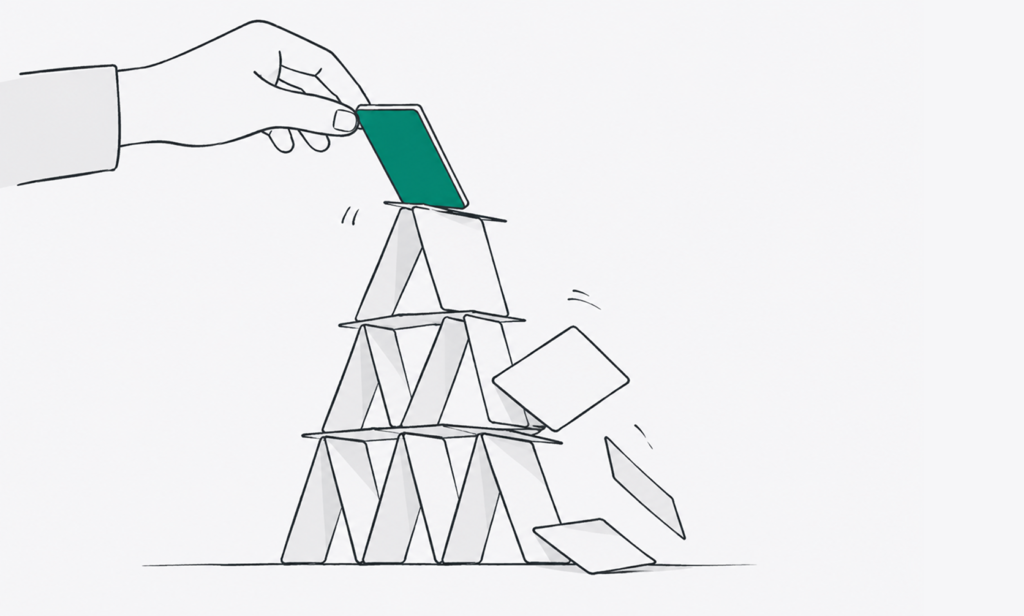
The issue is that branding compounds. A name that doesn’t make sense for SEO will cost you organic visibility for years. A visual identity that can’t flex across use cases will need a full rebuild the moment you expand your market. A brand that was designed for one audience will actively confuse another.
We see this constantly. Founders come to us with an AI-generated logo, a domain they settled for, and a name that made sense at 2am during ideation but doesn’t actually communicate anything to a customer. And the business has already built a quarter’s worth of marketing materials around it.
According to HubSpot research cited by Keevee, 29% of startups specifically struggle with ineffective marketing and branding, leading to low visibility and stalled sales. That is not a design problem. That is a strategy problem that shows up in the design.
The best branding agencies for startups understand this distinction. They are not decorating your product. They are building the system your growth will run on.
What good startup branding actually includes
A logo is the output. The work that gets you to a good logo is the input. Here is what that work actually looks like when it’s done right.
Naming and URL strategy
The name is not just a creative decision. It is a business decision, an SEO decision, and a positioning decision all at once.
When we work with early-stage startups, naming is usually where we start. We run competitive analysis, look at what domains are available, evaluate the SEO implications of different directions, and check how the name will read across different audiences and use cases.
We are currently working with a security startup called SecureNest. They came to us with a name that was already partially in market. Before we touched a single visual, we mapped the competitive landscape. What we found: almost every competitor in the space had weak, generic branding. That’s not a risk to flag. That is an opportunity to walk through.
Naming informed the brand. The brand informed the domain strategy. All three are connected. Treating them separately is one of the most expensive mistakes early-stage companies make.
Competitive positioning built into the identity
Brand identity that doesn’t account for your competitive set is just aesthetics.
Before any visual direction gets developed, we need to know what everyone else looks like. Not so we can be different for the sake of it, but because differentiation is what makes a brand work. If every company in your space uses dark blue and corporate typography, there is a strategic reason to go somewhere else. And there is a strategic reason to know exactly where that “somewhere else” is before you commit to it.
This is especially important for startups with broad use cases. SecureNest, for example, serves multiple verticals including medical institutions. A brand that niches down too hard will close doors. A brand with no coherent identity will open none. Finding that middle ground takes research, not intuition.
A scalable system, not a one-time deliverable
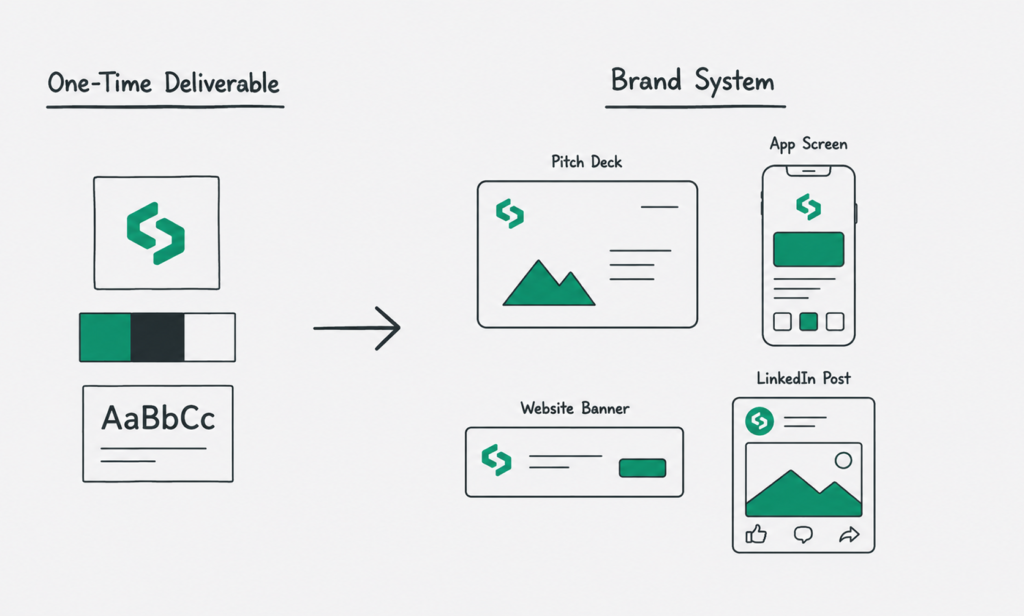
The most common mistake in startup branding is treating it as a finished product. A logo. A color palette. A font. Done.
The best startup branding is a system. It has to work on a pitch deck, a product interface, a LinkedIn post, a trade show banner, and a white-label partnership page, and It has to work when you are a team of five and when you are a team of 500. It has to work when your product evolves.
What we give founders is not a brand package. It is a brand infrastructure. Starter brands are available for early-stage budgets, and they are built from the same thinking as the full system. The difference is scope, not quality of reasoning.
Design consistency that travels
Brand consistency is not about being rigid. It is about being recognizable.
Research from the Interaction Design Foundation confirms that branding in UX design fosters recognition, trust, and loyalty precisely because it creates predictable, coherent emotional signals across every touchpoint. When your website, your product, your sales deck, and your social presence all feel like they come from the same place, customers trust you faster. Investors take you more seriously. Hires want to join you.
For startups, that consistency has to be built in from the beginning. It cannot be retrofitted after two years of inconsistent execution.
What to look for in a startup branding partner
Not every branding agency is built for early-stage companies. Here is what actually matters at the startup stage.
They think about the business, not just the brief. The best partners ask about your go-to-market, your funding stage, your competitive set, and your growth trajectory before they open Figma. They understand that a name affects SEO, that a logo has to work at 16×16 pixels, and that your brand needs to survive the next three pivots.
They do not overbuild. A 200-page brand bible is not useful at the seed stage. What you need is a strong, clear foundation that your team can actually use. The right partner calibrates the deliverable to the stage.
They give you something that stands out. This sounds obvious. It isn’t. Most startup branding ends up looking like startup branding: geometric sans-serif, gradient, muted primary color. Because most agencies are solving for “looks professional” rather than “looks like you.” There is a real difference.
They connect the dots. Naming, domain, competitive analysis, visual identity, design system, brand guidelines. These are not separate workstreams. They are one conversation. A partner who can hold all of it at once will save you from the expensive misalignment that comes from handing each piece to a different vendor.
We work with founders from seed to scale. Some need a starter brand to get to their first fundraise. Some need a full system that can carry them through a Series B and beyond. The scope changes. The quality of thinking doesn’t.
The branding mistake that costs the most
If there is one thing we see consistently, it is this: founders wait too long.
They ship a product with a placeholder identity, and run ads under a brand that doesn’t resonate. They go into investor meetings with a deck that undermines the quality of what they’ve built. And then, six months in, they have to rebuild from scratch while simultaneously running the business.
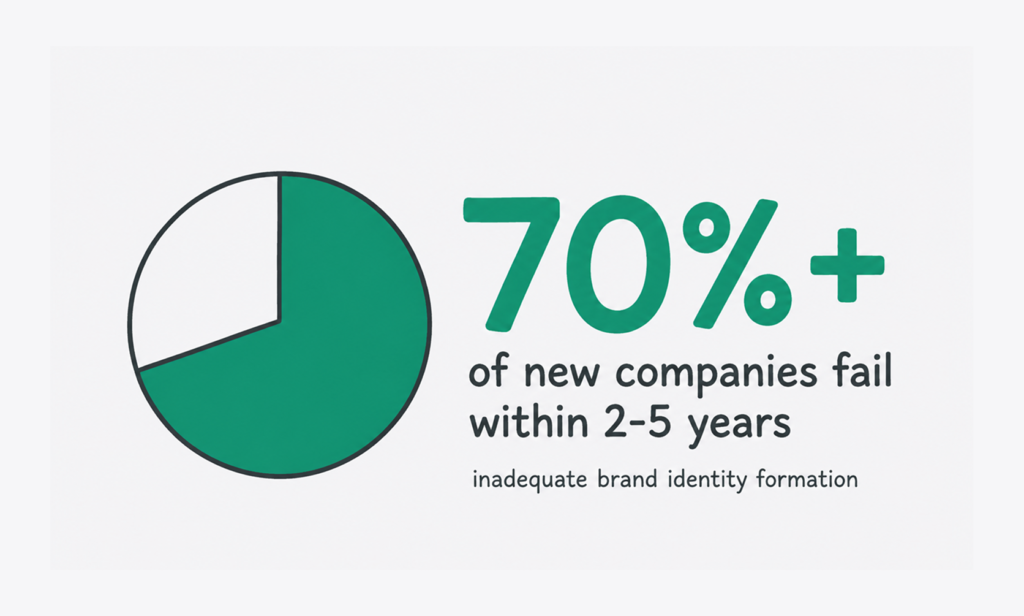
According to a 2025 analysis by Arounda Agency, over 70% of new companies fail within their first two to five years, with inadequate brand identity formation cited as a major reason early-stage companies struggle to connect with their target audience.
Branding is not a vanity exercise. It is how your customers decide whether to trust you, It is how investors decide whether you understand your market, and It is how your team decides whether they believe in what they’re building.
The startups that get this right early are not spending more. They are spending smarter, on a foundation that does not need to be replaced.
Key takeaways
- The question is not which branding agency is best. The question is whether your branding partner understands your business well enough to build something that grows with it.
- Naming, domain strategy, SEO, and visual identity are one connected decision, not four separate projects.
- A startup brand needs to be a scalable system, not a one-time deliverable. Build it to flex.
- Competitive analysis should happen before any visual direction is developed. Differentiation is a strategy, not an aesthetic.
- 90% of startups fail within 10 years (Forbes), with poor branding and ineffective marketing cited as a contributing factor. Investing in brand early is not a nice-to-have. It is risk management.
- Starter brands built with serious strategic thinking are accessible at early-stage budgets. You do not need a $100K agency engagement to get a brand that works.
Frequently asked questions
When should a startup invest in branding? Earlier than most founders think. If you are preparing for a launch, a fundraise, or any kind of market-facing activity, your brand is already working for you or against you. The best time to build it properly is before you have months of inconsistent execution to undo.
What is the difference between a logo and a brand? A logo is one element. A brand is the full system: name, visual identity, tone of voice, design consistency across every touchpoint, and the emotional signal all of it sends to your customers and investors. A good branding partner delivers a system, not just an asset.
How much does startup branding cost? It depends on the scope and the stage. Starter brand packages designed for early-stage companies can be built for a fraction of what full-service agencies charge, while still being grounded in strategy, competitive research, and scalable design. The goal is to match the investment to what the business actually needs right now, not to overbuild.
What makes startup branding different from enterprise branding? Startup branding has to move fast, flex across evolving use cases, and work with a lean team who may not have dedicated marketing resources. It also has to carry a lot of weight early: building credibility before there is a track record, differentiating in a crowded market before there is much product proof. That requires a different kind of thinking than managing an established brand.
How does The Growth UX Studio approach startup branding? We start with the business, not the brief. That means competitive analysis, naming strategy, SEO and domain considerations, and a clear understanding of your growth trajectory before we develop a single visual direction. We build brands that are growth-oriented, scalable, and designed to make your startup stand out in a market where most competitors are underinvested in identity. If you want to talk through what that looks like for your company, [get in touch].