
Most businesses treat their website like a digital brochure. Something you build, launch, and then mostly leave alone until it starts looking embarrassing. It’s there. It’s got your logo. It says what you do. That used to be enough, but it isn’t anymore.
Your website is one of the most powerful marketing tools your business has. It’s working (or not working) every hour of every day, bringing in leads, losing them, building credibility, or quietly undermining it. The businesses that understand this hire web design companies that treat it that way too. The ones that don’t end up in the same place they started, a year later, wondering why nothing moved.
When you’re figuring out how to choose a web design company, the stakes are higher than most people realize. Because a great website today doesn’t just have to look current. Your website has to work for three audiences at once.
Your human visitors. The search engines that determine whether anyone finds you. And the AI systems that are increasingly recommending businesses before a person even clicks a result.
Most web design companies build for one of those. Maybe two. This guide will help you find the ones that build for all three.
Why your website has to work for three audiences at once
Let’s start with something most web design companies won’t tell you upfront.
Your website is not one thing. It is three things running at the same time.
Audience 1: Your human visitors.
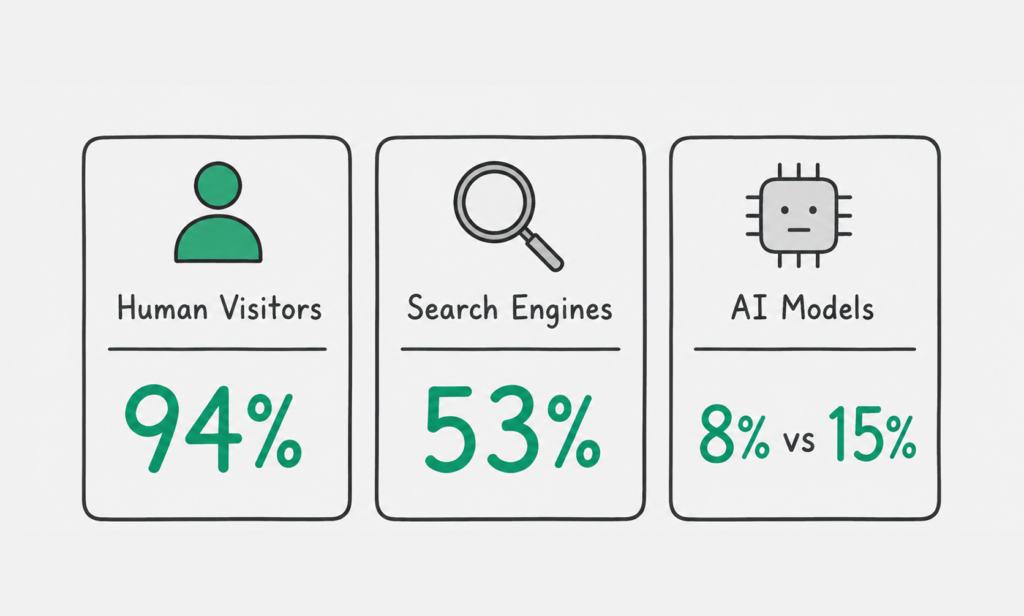
These are the people who arrive after a referral, an ad, or a search result. They are forming an opinion about your company in milliseconds. Research from Stanford’s Web Credibility Project found that 94% of first impressions of a website are design-related. That means before a visitor reads a word of your copy, they have already made a judgment about whether they trust you. Layout, typography, spacing, load time, color. All of it registers before any message lands.
And it doesn’t stop at looking credible. Your human visitors need to be able to actually use the site. Can they find what they came for? Does the navigation make sense to them, not just to the person who built it?
We have worked with companies that had sites that technically functioned but quietly frustrated the people using them. When we restructured the information hierarchy on Lowe’s product and search listing pages, the problem was not the products themselves. Customers could not find what they came for. Fixing that structural problem led to a $53.4M increase in annualized revenue in 2021. (See the full case study)
That is not a design story. That is a business story. And it started with understanding how real people move through a site.
Audience 2: Search engines.
Organic search generates 53% of all website traffic, making it the single largest traffic source for most businesses, according to 2026 data from DemandSage. If your site is not structured in a way that search engines can read, index, and understand, you are invisible to more than half of your potential audience.
This is not just about keywords. It is about how your pages are structured, how fast they load, how well your content answers real questions people are searching for, and whether your site architecture signals authority on your topic. Every web design company will say they “understand SEO.” Very few build it into the structure of the site from day one rather than bolting it on at the end.
Audience 3: AI models.
This is the newest audience and the one most companies are not thinking about yet. Google AI Overviews, ChatGPT, Perplexity, and Claude are now answering questions directly. Pew Research tracked 68,000 real searches in 2025 and found that when an AI summary appeared, users clicked through to a website only 8% of the time, compared to 15% without one. That number will keep moving. AI systems are not just changing where people get answers. They are changing whether they visit your site at all.
For AI to recommend your business, your site needs to be structured as a credible source. That means clear, authoritative content organized around real questions your customers ask. It means having a structured, well-maintained online presence that AI systems can parse and trust. It means discoverability infrastructure, not just design.
A web design company worth hiring in 2026 builds all three of these into the brief from the beginning. If they are only designing for humans and hoping SEO will sort itself out, that is a red flag.
What most web design companies get wrong
Here is what we see happen, over and over.
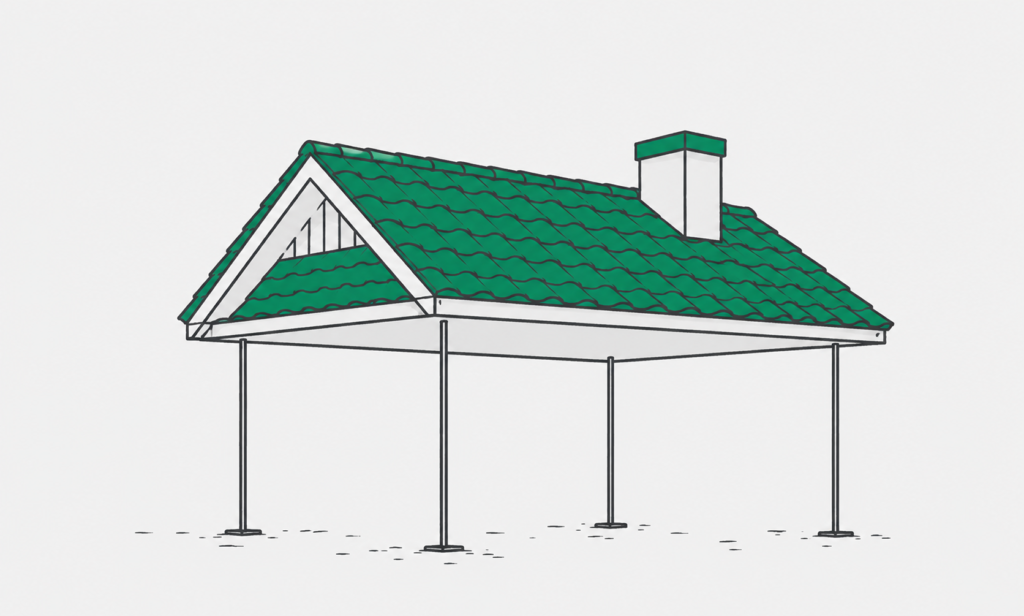
A business hires a company based on a beautiful portfolio. The work looks great. The process is smooth. The site launches and everyone is proud of it. Three months later, traffic has not moved. Leads have not improved. The team cannot update content without breaking something.
The problem was not the design. The problem was what was never discussed.
Most web design projects start with aesthetics and build outward. The right approach starts with strategy and builds toward aesthetics. Those are two fundamentally different orientations, and they produce fundamentally different results.
The companies we see getting this right start with three questions before they open Figma or pick a color palette:
Who is actually using this site and what are they trying to do? How will people find this site, and what do they need to see when they get here? How will this site stay useful and current six months after launch?
If the company you are evaluating cannot answer those questions clearly before a proposal, that is important information.
How to evaluate a web design company: what to actually ask
Does their portfolio show results, not just visuals?
A portfolio shows you what a company can make. It does not show you what they can change. Ask for case studies, not screenshots. Ask specifically: what was the problem before the engagement? What did you change? What happened to traffic, leads, or conversions after launch?
A confident, experienced company will have answers to this. A company that shows you what things look like without being able to tell you what happened next is a company that does not think in outcomes.
Do they have a clear point of view on site architecture and user experience?
This is where you separate strategic partners from execution shops.
Ask them to walk you through how they approach information architecture, and ask how they decide what goes in the navigation. Ask what they do when a client’s internal team has strong opinions about content placement that conflict with what their customers actually need.
If they say “we build what the client wants,” that is not good enough. A great web design partner has a point of view informed by how real people use the web. They will push back, and bring data. They will design for your customer, not your conference room.
At The Growth UX Studio, our approach has always been to start with the user’s actual journey before we touch a layout. Because here is the thing: the person who built your last site was not your customer. They were guessing. And that is how you end up with a navigation that makes sense to your VP of Marketing and confuses everyone else.
Do they understand how to build for search from the start, not as an afterthought?
Ask directly: how do you integrate SEO into your design process? At what stage does SEO strategy begin?
If the answer is “we hand it off to an SEO team after launch,” that is a process problem. Search engine architecture is a structural decision. URL structure, heading hierarchy, internal linking, page speed, content organization. These are design decisions. Making them after the site is built means rebuilding the foundation.
A web design company that treats SEO as a layer you add at the end will cost you more in the long run than one that builds it in from day one.
Do they understand AI discoverability, or are they still thinking only about Google?
This is the question almost no one asks, and it is becoming the most important one.
Ask what they know about AI Overviews, answer engine optimization, or being cited in AI-generated responses. Ask how they approach structured content and content authority.
You do not need them to have a complete answer. But you do need them to be thinking about it. A company that has not considered what happens when half your potential traffic is intermediated by an AI model is not designing for the web that exists today.
Can your team actually maintain the site after launch?
This one sounds operational. It is actually a design question.
Ask how they approach the content management system, and whether their team will be able to update content without needing a developer, and what training and documentation they provide. Ask what happens if a team member breaks something.
One COO we spoke with recently put it plainly: “My team can’t figure out how to update content and the team-facing side is really confusing.” That is a design failure. It means the site was built for the launch, not for the business. Maintenance and usability for your internal team should be part of the brief, not an afterthought.
The questions you should ask before you sign
Here is a practical list to bring to any conversation with a web design company:
Strategy: Can you walk me through how you approach a site’s information architecture before design begins? How do you validate that the navigation and content structure match how our customers actually think?
Results: Can you show me a case study from a client in a similar business, including what changed after the engagement in terms of measurable outcomes?
SEO: At what point in your process does SEO strategy begin, and who owns it? How do you handle technical SEO decisions like URL structure and page hierarchy?
AI discoverability: How are you thinking about AI search and structured content in the sites you build now?
Sustainability: What CMS will you build on and why? What will it take for our team to update the site without developer support after launch?
Partnership: What happens if we disagree with a design decision? What does your revision and feedback process look like?
A company that answers these questions clearly, with specifics and without defensiveness, is a company that has done this before and learned from it.
Common mistakes to avoid
Choosing based on aesthetics alone. Design is not subjective. A site can look stunning and still fail to convert, fail to rank, and fail to communicate your value clearly. You are not hiring someone to make something beautiful. You are hiring someone to make your business work online.
Not asking about what happens after launch. The launch is not the finish line. Ask explicitly: what does your post-launch support look like? How do we handle updates? What if something breaks six months from now?
Hiring a company that says yes to everything. Agreement is not the same as alignment. The best web design partners will tell you when they think you are wrong. They will bring data. They will push back on decisions that will hurt the end user. If every conversation feels easy and everyone agrees with everything you say, that is not a good sign.
Treating the website as a one-time project. Your website is a living business tool. It should evolve as your market evolves, as your customers’ needs change, and as AI and search continue to reshape how people find and evaluate companies. A partner who builds for the long term thinks differently than one who builds for the launch.
Key takeaways
- When choosing a web design company, look for a team that designs for three audiences: your human visitors, search engines, and AI systems. Most companies only think about one.
- Ask for case studies that show outcomes, not just portfolios that show visuals. The question is not what the site looks like. It is what changed.
- SEO architecture is a design decision, not a post-launch task. A company that treats it as a separate layer will cost you more over time.
- Your internal team needs to be able to use the site after launch. If they cannot update content without a developer, the site was built for the launch, not for the business.
- AI discoverability is the newest and fastest-changing factor in how people find businesses online. Ask any company you evaluate how they are thinking about it.
Frequently asked questions
What is the most important thing to look for in a web design company? Look for evidence that they design from the user’s perspective, not from an internal team’s assumptions. Ask for case studies with measurable outcomes, not just portfolio screenshots. The most important thing is whether the company understands your customer’s actual behavior and builds the site around that, rather than building the site their way and hoping it works.
How much does a web design company typically charge? For a mid-sized business redesign, costs generally range from $20,000 to $75,000 or more depending on scope, strategy work, and whether the engagement includes SEO infrastructure, content production, and UX research. What matters more than the number is what’s included. A cheaper project that skips strategy, structure, or SEO often costs more in the long run than a more comprehensive one done right.
How long does a web design project take? A properly scoped redesign typically takes three to six months from kickoff to launch when it includes discovery, strategy, design, and development. Rushing the timeline usually means skipping the strategy phase, which is the phase that determines whether the finished site actually works.
What is the difference between web design and UX design? Web design typically refers to the visual and technical craft of building a site. UX design is the strategic layer that determines how the site should work before a single visual decision is made. It covers how users navigate, where they go, what they do, and what stops them. The best web design companies integrate UX thinking from the start. If the two are treated as separate concerns, the result is usually a site that looks good but does not perform.
How do I know if my current site needs a redesign or just improvements? Ask three questions: Can your customers find what they need without help? Is your site bringing in qualified visitors from search? Can your team update it without a developer? If any answer is no, the problem is probably structural rather than cosmetic. A good design partner will tell you honestly whether you need a full rebuild or targeted improvements. Be cautious of anyone who recommends a full redesign before understanding your situation.
Looking to work with a team that designs for your customers, your search visibility, and your long-term growth? We work with mid-sized businesses and growing brands on web strategy, UX, and SEO infrastructure. Let’s talk about your site.