
Your product does everything it promises. It includes all the features investors want to see (whether those features actually serve your users is, as we will get to, a different story). The sales deck is solid. The demo goes well. And then users get into it, and things quietly fall apart.
Adoption lags. Support tickets stack up. The renewal conversation gets harder than it should be. Your developers are constantly fielding requests that should have been designed before they were built. Nobody can quite put their finger on why.
This is what poor UI/UX design services actually cost a B2B company. Not a bad-looking interface. Not dated colors or a clunky logo. Real operational drag that shows up in your retention numbers, your support costs, and your dev team’s backlog.
If your B2B product is at the stage where you know something is off but you are not sure what to fix first, this post is for you. We will explain what serious UI/UX design services for B2B companies actually include, why most B2B software ends up with UX problems in the first place, and what to look for in a design partner who can solve them.
Why B2B UX is harder than it looks
B2B products have a structural problem that consumer apps do not.
The person who buys the software is almost never the person who uses it every day.
In a consumer product, the buyer and the user are the same person. If the experience is frustrating, they delete the app. Feedback is immediate. In B2B, the purchasing decision runs through IT directors, procurement teams, and executives evaluating ROI, security, and integration requirements. The people doing the actual daily work (the timekeepers, the underwriters, the operations managers) often have little say in what gets chosen.
So software vendors design to win procurement checklists, not to serve the people using the product. The result is software that looks capable on paper and creates friction in practice.
According to Gartner’s B2B buying research, 77% of B2B buyers describe their most recent purchase as very complex or difficult. That complexity does not disappear after the contract is signed. It lands on the users.
This is the root of most enterprise UX debt. It is not incompetence. It is misaligned incentives.
The assumption that creates the most expensive problems
Here is the pattern we see more often than anything else in B2B product work.
A founder or product team has a clear problem to solve. They write requirements. They hand them to developers. Developers build what was asked for. Months pass. The product ships. And then the feedback starts: “This is confusing.” “We cannot figure out how to do X.” “Our team will not use the new system.” “Can we go back to the spreadsheet?”
The assumption was that UX would figure itself out in the implementation. That good engineering would produce a good experience. That the team knew the user well enough to skip the research phase.
That assumption is expensive.
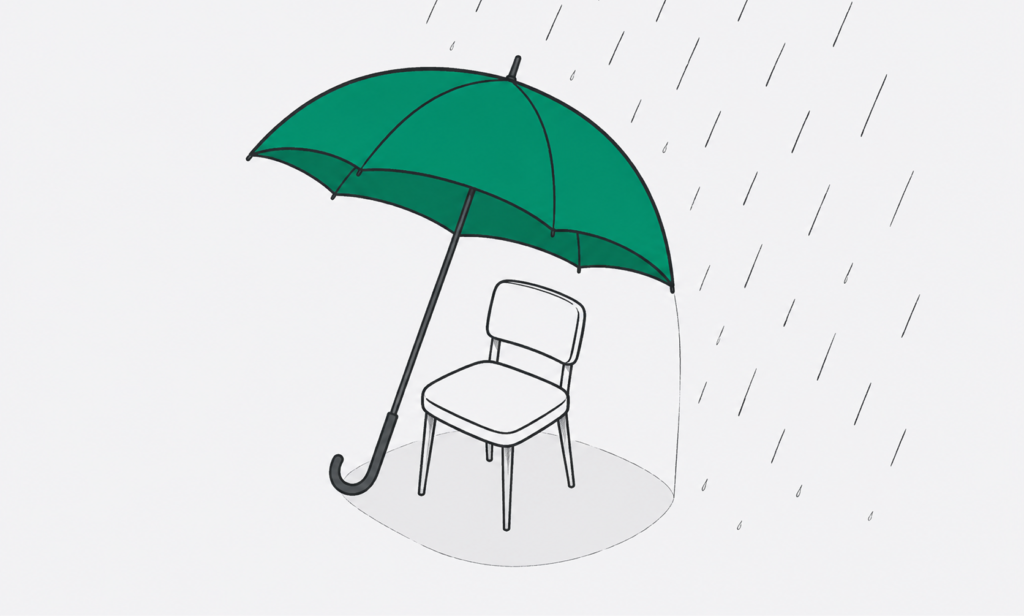
When UX is not done before development begins, the cost does not disappear. It moves. It shows up as rework cycles, as features that need to be rebuilt because users cannot find them, as developers fielding UX questions they were never set up to answer. Fixing a UX problem after development costs significantly more than catching it during the design phase. The compounding effect of each deferred decision is what turns a manageable product into a legacy system nobody wants to touch.
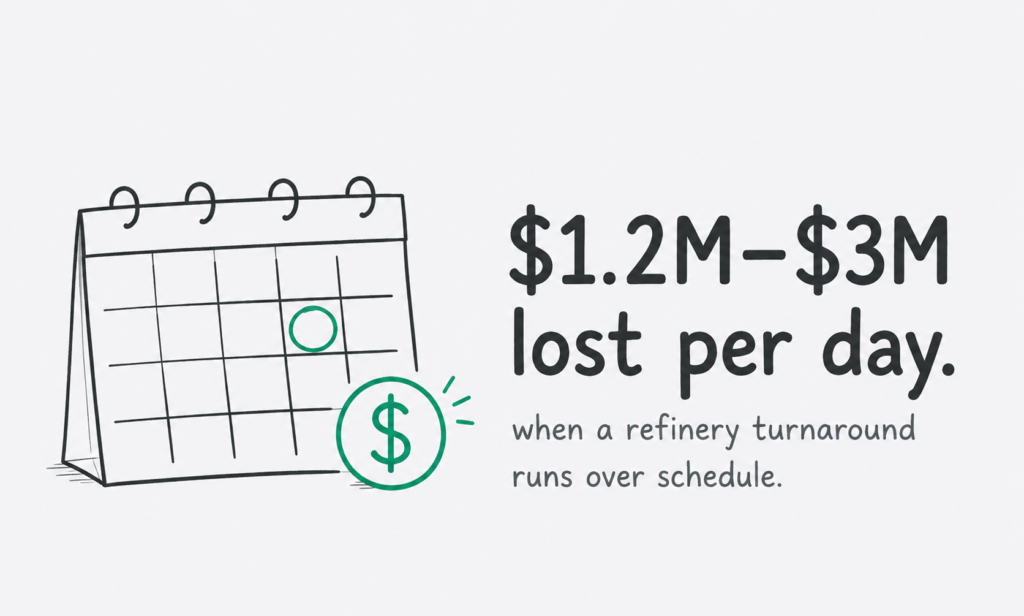
We saw this directly when we worked with Turn Time Pro, a quality control and project management platform for the refinery turnaround industry. Every day a refinery runs beyond schedule costs between $1.2 and $3 million in lost margin. The teams managing these turnarounds were working from paper-based workflows: checklists, manual sign-offs, physical handoffs between contractors and supervisors. The problem was not that people did not know their jobs. The problem was that no software had been designed around how they actually did them.
If the development team had been handed a requirements document and told to build a project management tool, they would have built a project management tool. One that made sense on a whiteboard and created chaos on a refinery floor. Instead, we started with deep process analysis: shadowing workflows, mapping dependencies, understanding the different roles involved and what each one needed to see, when. That foundation is what made the software buildable in a way developers could execute clearly, and usable in a way that people with no software background could actually adopt. Read the full case study: https://thegrowthuxstudio.com/case-studies/quality-control-project-management-software-for-refinery-turnarounds/
The design phase is not a bottleneck. Skipping it is.
What the buyer-user disconnect actually cost you
The organizational dynamics that create bad B2B UX are worth naming plainly, because they are rarely discussed as a design problem.
Most enterprise software is built in response to what buyers ask for during the sales process. Features get added to win deals. Interfaces get designed to impress demos. Internal teams build for the stakeholders with the loudest voices rather than the people doing the actual work. Over time, this accumulates into products that are technically feature-rich and practically exhausting to use.
When we redesigned the MyTrack platform for Management Controls (MCI), the product was 20 years old and managing contractor workflows across 300+ oil and gas sites worldwide. That platform helps clients save over $50 billion annually in contractor spending. The UX problem was not cosmetic. The Timekeeper persona, whose entire job ran through this platform every day, was working from a dashboard that had been built as a copy of a completely different persona’s workspace. Nobody had stopped to ask whether a Timekeeper’s actual workflow looked anything like a Coordinator’s.
It did not.
Spending time to understand that one distinction, through research with a single internal user who had been a Timekeeper, led to a completely different and far more effective solution. Simplified labels, rebuilt information architecture, a custom dashboard designed around how Timekeepers actually think and work. One real user to test on is infinitely better than none. Read the full case study: https://thegrowthuxstudio.com/case-studies/tracking-management-software/
This is the organizational dynamic that no amount of good development can fix: when the people building the product have not spent time with the people using it, the product solves the wrong problem efficiently.
McKinsey’s Business Value of Design study tracked 300 publicly listed companies over five years and found that top-quartile design performers achieved 32% higher revenue growth and 56% higher total returns to shareholders than their industry peers. The results held across medical technology, consumer goods, and retail banking. Design is not a B2C advantage. It is a business fundamental.
What good UI/UX design services for B2B actually include
Not all UI/UX design services are built for the complexity of B2B products. Here is what to look for, and what distinguishes work that sticks from work that looks good in a handoff and falls apart in production.
Discovery before wireframes
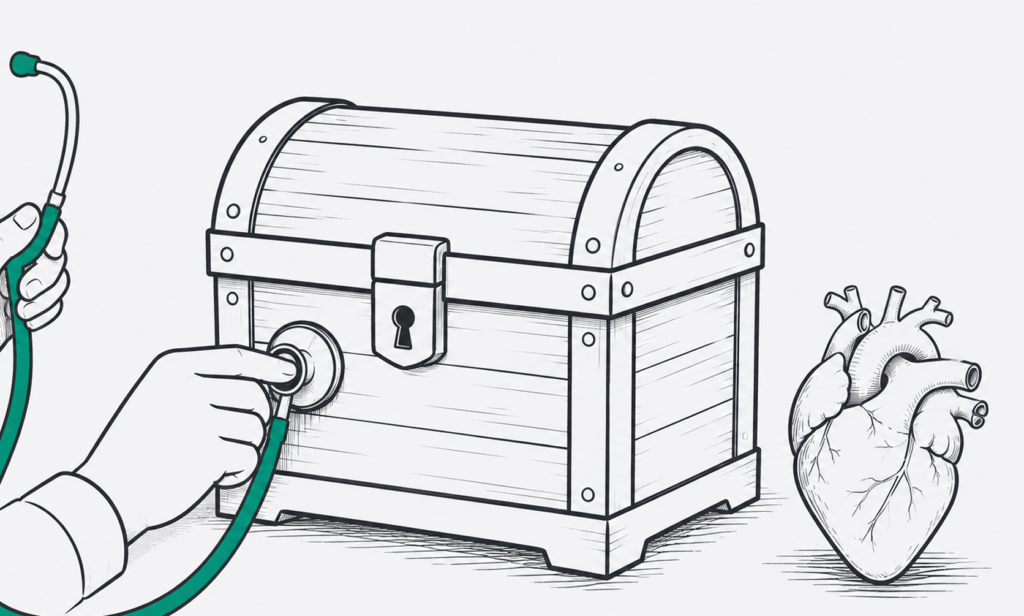
Good B2B UX starts with understanding the problem, not with screens. This means stakeholder interviews, workflow analysis, and research with actual users. Not just the people who bought the product, but the people who use it every day. It means mapping the personas involved, understanding what each one needs when they interact with the system, and finding the places where current workflows break down.
This is the step most teams want to skip. It feels slow when there is pressure to ship. It is the most valuable thing you can do.
Multi-persona design
B2B products almost always serve more than one type of user. An administrator sees something different than an operator. A manager has different needs than a frontline employee. An executive dashboarding across the business has different requirements than the person entering data. Good B2B UX design maps these personas explicitly and designs distinct, role-appropriate experiences rather than building one interface that tries to serve everyone and serves no one particularly well.
When we worked with Friends Cove Mutual Insurance, the real problem was not that their tools were outdated. It was that three different teams (underwriting, inspections, and admin) were each running their own separate workaround stack: spreadsheets, personal checklists, informal email rules. Nobody had a view of the whole. The design work began with mapping workflows across all three personas before a single screen was touched. The result was a unified internal tool built in Retool that gave each team what they needed while finally creating cross-team visibility that had never existed before. Read the full case study: https://thegrowthuxstudio.com/case-studies/insurance-policy-workflow-app/
Design and development working together
This is the piece that matters most, and it is the piece most commonly missing.
UI/UX design services that hand off a Figma file and consider the job done are not solving your problem. They are creating a new one. The translation from design intent to built product is where B2B experiences fall apart. Edge cases get missed. Complex workflows get simplified in ways that break the logic. Developers make judgment calls they should not have to make because the design did not account for real-world constraints.
The most effective design partners are in the room with your developers, or at minimum in close and continuous conversation with them. They write design specifications developers can actually use, and they review implementation and catch drift before it ships. They treat the build phase as part of the design process, not a handoff destination.
This is not slower. It is how you avoid the rework cycle that adds months to timelines and buries your team in avoidable technical debt.
Research that connects to metrics
B2B UX work that cannot connect to business outcomes is not doing its job. Good UI/UX design services for B2B companies should be able to tie design decisions to the metrics your stakeholders actually care about: onboarding time, support ticket volume, task completion rate, user adoption, renewal rates. If your design partner cannot speak this language, they are designing for themselves.
Common mistakes B2B companies make when investing in UX
Hiring for output instead of outcomes. If you evaluate a design partner on deliverables (screens, prototypes, decks) you will get deliverables. The question worth asking is: does this person understand what problem we are trying to solve, and do they have a plan to validate whether the solution actually works?
Treating UX as a one-time phase. B2B products evolve. Workflows change. New personas get added. UX is not a project with a finish line. The most effective B2B product teams treat design as a continuous function, not something that runs before development and disappears after launch.
Leaving end users out of the process. The people who will actually use your product every day know things no one on your internal team knows. They know where the current system breaks, which workarounds they have built to survive it. They know what would make their job genuinely easier. Getting access to them, even one person, even briefly, changes the design outcome.
Remember: you are not your user. The assumptions your team makes about how people will use your product are almost always wrong in at least one important way. Research is how you find out which way.
Key takeaway
- UI/UX design services for B2B companies must address the buyer-user disconnect. The person who approves the purchase is rarely the person who uses the product daily, and designing for the wrong audience is the most common source of enterprise UX debt.
- Skipping UX before development does not save time. It defers costs into rework, failed adoption, and developer bottlenecks that take longer to fix than the design work would have taken.
- Multi-persona design is not optional in B2B. Administrators, operators, executives, and frontline users all need different things from the same system. Designing one catch-all interface serves no one well.
- The best B2B design partners work directly with your development team throughout the build, not as a handoff phase, but as a continuous collaboration that catches drift before it ships.
- Design-led companies achieve 32% higher revenue growth and 56% higher total shareholder returns than their peers, according to McKinsey. This holds across industries. It is not a B2C advantage.
FAQ
What do UI/UX design services for B2B companies actually include?
At minimum: discovery and user research, workflow and persona mapping, wireframing and prototyping, usability testing, and design specifications for development. Strong B2B UX partners also stay engaged during the build phase to ensure design intent survives implementation, and can measure outcomes against metrics your business already tracks.
How is B2B UX design different from B2C UX design?
B2C products serve one primary user who chose to use them. B2B products serve multiple personas across an organization, often including people who had no say in the purchasing decision. The workflows are more complex, the stakes of errors are higher, and the design must account for role-based differences in what each person needs from the system. Consumer design principles apply, but they are not sufficient on their own.
Why does skipping UX create developer bottlenecks?
When design decisions are deferred to the build phase, developers are forced to make UX judgment calls they are not positioned to make. The result is features that require rework, interfaces that do not match user mental models, and a feedback loop that runs through support tickets rather than a structured design process. Every deferred UX decision costs more to fix after it is built than it would have cost to solve before the first line of code was written.
How do we know if our B2B product has a UX problem?
Watch for these signals: high support ticket volume around specific workflows, low adoption of features users were expected to use, onboarding timelines that are longer than planned, and renewal conversations that get harder over time. These are rarely engineering problems. They are almost always experience problems that engineering was asked to solve.
How do we find the right UI/UX design partner for a B2B product?
Look for a partner who asks about your users before they talk about their process. Look for someone who has worked with B2B products at a similar stage of complexity and can name specific outcomes from that work. And look for someone who plans to be in the room with your developers, not just deliver a file and move on. If you want to talk through what that looks like for your product, we are happy to start that conversation: https://thegrowthuxstudio.com/contact/
Sources and other reading
–Gartner. “B2B Buying Journey Research.” Cited in WhatIfDesign, 2026.
– McKinsey & Company. “The Business Value of Design.” 2018.
– Forrester Research. ROI of UX investment. Cited in Maze, 2026.
Work with us
Looking for a UI/UX design partner who understands the complexity of B2B products and works directly with your development team to get them built right? We work with B2B companies from early-stage to enterprise, and we bring both the research depth and the business fluency to make the work stick.
Get in touch: https://thegrowthuxstudio.com/contact/